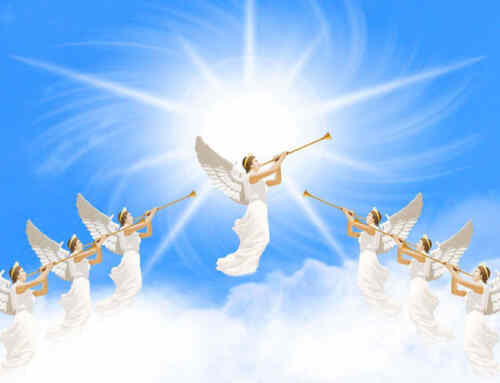
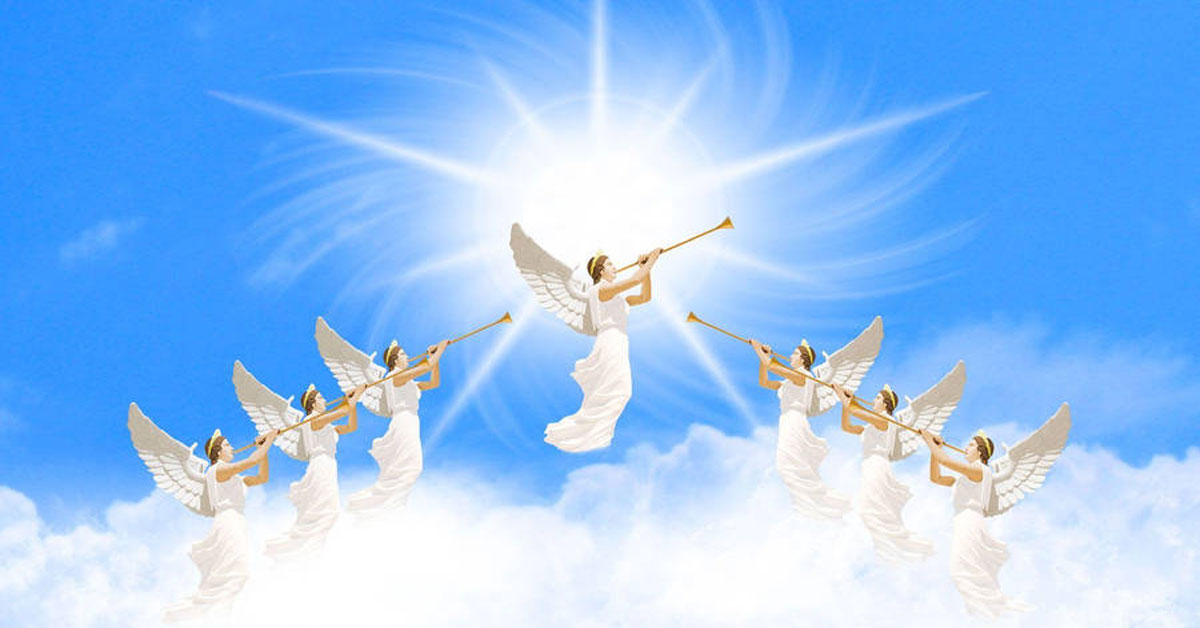
In the opening chapter of Ezekiel, God is seen seated on a throne above the sky and supported by four angels, described as living creatures. Each angel had four faces and four wheels. Each went forward, always acting according to God’s direction (See Ezekiel 1:19, 20 and Psalm 103:20). Having four faces suggests that wherever God’s angels are sent, they consistently act in harmony with God’s four primary attributes: justice, love, wisdom and power.
The Prophet Ezekiel lived before and during the Babylonian captivity, and his book was written in Babylon. He was a contemporary of the prophets Jeremiah and Daniel. After the 10-tribe kingdom of Israel was taken captive by Assyria, the remaining tribes were centered around Jerusalem. Like the 10-tribe kingdom before them, the 2-tribe kingdom committed terrible abominations, worshipping idols and pagan gods, described in Ezekiel 8. This deplorable conduct was the reason for God’s anger and determination to destroy the Temple and Jerusalem itself, described in Ezekiel 9.
Six men from the north were sent with weapons to carry out God’s decree. The six men sent to destroy Jerusalem represent Babylon, sent to punish what remained of Israel for their idolatrous behavior. Ezekiel described this as “a whirlwind that came out of the north” (Ezekiel 1:4). Jeremiah describes the invasion of Babylon in similar language. “Behold, the storm of the LORD has gone forth in wrath, even a whirling tempest; It will swirl down on the head of the wicked” (Jeremiah 23:19). This is the direct fulfillment of Ezekiel’s vision.
However, before Babylon was allowed to do its destructive work, a man dressed in linen was to mark the foreheads of those not in sympathy, and even mourned over, Israel’s idolatrous behavior (Ezekiel 9:5). This man pictures the prophet Jeremiah. His ministry involved preaching a message of repentance prior to the invasion of Babylon. His message marked out faithful individuals from those who supported the evil ways of Jerusalem. Jeremiah longed to see his fellow Israelites return to a proper worship of God, and some did. These people remained in Israel and were given the vineyards and fields of those who had either been killed or taken captive to Babylon. Their proper worship of God led to this blessing (Jeremiah 39:10).
Ezekiel 10 then describes that, as a result of God’s anger, His glory left the temple. He gave God’s instructions that the man in linen should take coals of fire and scatter them over Jerusalem (verse 2). This would be the consuming fire upon the city. The description of angels in chapter 10 is consistent with their use in previous chapters. They are told to take burning coals and give them to the man dressed in linen (verse 7). This describes how God’s will was accomplished through human agencies (Babylon) but was actually directed by God through His angels.
There is an important lesson being conveyed regarding the importance of the proper worship of God. There are many forms of idolatry that can, and have, replaced the true worship of God. False worship and idolatry have become prominent in our society over the centuries. As a result, the Scriptures refer to a great “time of trouble” which will remove the hurtful institutions of man. “Therefore wait ye upon me, saith the LORD, until the day that I rise up to the prey: for my determination is to gather the nations, that I may assemble the kingdoms, to pour upon them mine indignation, even all my fierce anger: for all the earth shall be devoured with the fire of my jealousy. Then will I turn to the people a pure language, that they may all call upon the name of the LORD, to serve him with one consent.” (Zephaniah 3:8,9).
The sequence of Zephaniah’s words is meaningful. The nations will be gathered together and the wrath of God will be poured out. But following that cleansing work, the pure language of truth will spread throughout the world. “Thus says Jehovah of hosts, Once more in a little while, I am going to shake the heavens and the earth…I will shake all nations! And the desire of all nations shall come, saith Jehovah of Hosts” (Haggai 2:6,7).
God’s judgments on Israel were designed to remove the things that hurt them and bring them closer to God. That is the same principle that will remove what is harmful in our world and bring God’s kingdom on earth.