This transcript was generated automatically. Its accuracy may vary
Short Summary
The discourse emphasizes the Christian role as faithful stewards entrusted with God’s possessions, including time, talents, money, and spiritual truths, highlighting that all belongs to God and stewardship begins at consecration. It stresses the importance of using these gifts diligently and faithfully for God’s s...
This transcript was generated automatically. Its accuracy may vary
Short Summary
The discourse emphasizes the Christian role as faithful stewards entrusted with God’s possessions, including time, talents, money, and spiritual truths, highlighting that all belongs to God and stewardship begins at consecration. It stresses the importance of using these gifts diligently and faithfully for God’s service, warns of consequences for unfaithfulness, and illustrates stewardship through biblical examples, urging believers to manage their responsibilities with love, zeal, and accountability as they await future rewards.
Long Summary
Failed to generate description.
Transcript
Well, as you can see, the title of our talk today is your stewardship, and definition of a steward is one who has been entrusted with another’s goods or possession. It implies a consequent responsibility of a sacred trust. A steward is a manager or overseer entrusted with another’s property. It defines a Christian’s role as a faithful administrator of God’s assets.
In Genesis 1:1, we see in the beginning, God created the heavens and the earth, and this scripture establishes God as the ultimate owner of all things, and then in Psalm 24:1, we read, the earth is the Lord’s and the fullness thereof, the world and they that dwell therein. Well, this again reinforces the thought that everything belongs to God, and then we read in 1st Chronicles 29:11, Thine, O Lord, is the greatness and the power, and the glory, and the victory, and the majesty for all that is in heaven and in earth is thine.
Thine is the kingdom, O Lord, and thou art exalted as head above all. Well, these. These. Excuse me just a second. I got to do a little move.
There we go. These scriptures clearly establish that all belongs to the Creator of all, which is God.
Hang on a second. Got. Okay, here we go. I think we’re getting there. Okay.
Then we read in Genesis 2:15 that God placed man in the garden to dress it and to keep it. Thus, the first stewardship was given to Adam. Then in reprint 54 36, we’re told in olden times it was the custom for rich men to appoint stewards. Such a steward had an absolute control of his master’s goods, as had the master himself. He had, as it were, the power of attorney.
Well, what does a power of attorney authorize? Well, there are various forms of power of attorney. There’s what’s called a general power of attorney. This grants the agent, that is the one entrusted to the care, broad powers to handle a wide range of the principal, the one who granted the authority. The principal’s financial and business affairs.
The durable power of attorney. This is the most common, an important type for estate planning. It includes specific language that allows it to remain in effect or endure even if the principal becomes mentally incapacitated. Again, the principal, the one who granted the authority. This is crucial for the managing affairs.
If someone develops dementia or is in a coma. There’s also what’s called limited or special power of attorney. Well, this grants the agent authority to perform a specific act or handle a specific transaction, like selling a piece of property or managing a bank account. It becomes invalid once the specific task is completed. There is also the medical or health care power of attorney.
This is a specific type of durable power of attorney that grants an agent the authority to make health care decisions on the principal’s behalf if they are unable to do it themselves. But the type or power of attorney that fits our discussion, I feel, is what’s called the springing power of attorney, and this is a document which springs into effect only upon a specific future event.
The event that springs this power into effect for us. It is the act of our consecration, the submission of all to God’s use. At the point of consecration we enter into a sacred trust. We become stewards of the Master’s goods, and our stewardship begins when we receive the good news. At the point of consecration, we enter into a sacred trust.
We become stewards of the Master’s goods, as illustrated in the Parable of the Pounds and Talents. Consecration is when we receive the opportunity of stewardship and must display zeal and faithfulness in fulfilling our responsibilities. However, spiritual understanding is selectively granted. The mysteries of God’s kingdom are revealed only to those with prepared hearts. Disciples are the consecrated.
The world of mankind is not arbitrarily excluded from this knowledge. They lack the knowledge because they lack the proper heart condition to receive it, and when we speak of being good stewards, we must understand what those things are that we are to be good stewards of. What are these goods? We are to be stewards of the consecrated money, time, and talent in our hands.
It doesn’t matter if your goods are many or few, large or small. These things were devoted to the Lord’s service at the point of consecration, and Psalms 90, verse 12 shows us the importance of our time. So teach us to number our days, that we may apply our hearts unto wisdom. So again we want to be good stewards of the time that we have before us put it to use in God’s service, counting the days of so many privileges, so many opportunities, so many blessings, to use those things entrusted to our care in Jehovah’s service.
And each individual’s talents differ, all according to the grace of God. Romans 12:6 having then gifts differing according to the grace that is given to us, we are to use our God given abilities for his purposes. The oracles of God, and some more of these goods that are entrusted to our care. Romans 3:1 2 what advantage then hath the Jew, or what profit is there of circumcision? Much every way, chiefly because that unto them were committed the oracles of God.
Now these verses speak of the issue of circumcision amongst the Jews, and how, as a result, they were privileged to understand the oracles of God. They were distinguished as separate from all other peoples, with a special relationship to God, and we too, because of the circumcision of our hearts, separating ourselves from the world and its ways, are entrusted with the deep things. The oracles of God. Treasures are another thing, or the part of our goods, and these may afford, may assume rather various forms.
2nd Corinthians 4:7 speaks of the most important treasure of all. It reads, we have this treasure in earthen vessels, that the excellency of the power may be of God and not of us. The treasure here referred to is the Holy Spirit. It was what inspired the apostles. From the sixth volume we read, it is well that we have confidence in the apostles as faithful witnesses or historians, and that we notice that their testimonies bear the stamp of honesty and that they sought not wealth nor glory amongst men, but sacrificed all earthly interests in their zeal for the risen and glorified Master.
Their testimony would be invaluable if it had no further weight than this. But we find the Scriptures teaching that they were used of the Lord as His inspired agents, and that they were specially guided of him in respect to the testimony, doctrines, customs, etc. Which they would establish in the Church. They bore a witness not only to the things they heard and saw, but additionally to the instruction which they received through the Holy Spirit. Thus they were faithful stewards.
And it’s part of a stewards business to be proactive in identifying opportunities for using the goods committed to his charge. Remember, our consecration offering was our all, giving our all to God. The new creature is responsible for managing all of its earthly affairs and good services and goods. Rather, in service to God. Our role is one of faithful administration, not ownership.
We’ve been entrusted with whatever talents we may have, but they’re to be used in God’s service. They’re not ours, they’re God’s. The essential qualification for a steward is not success, results, or the magnitude of gifts, but simple faithfulness in managing what has been entrusted. This applies equally to men and women. It is required as essential and demanded of stewards that one be found faithful and trustworthy unfaithfulness in the present time.
Respecting things of trifling value in comparison would mean unfaithfulness us in the future great things. Whoever therefore selfishly appropriates to himself the things of which he is steward will not be trusted with the future great things, and whoever is sacrificing will thus demonstrate his faithfulness, his loyalty to God, and to such the greater things will be entrusted. Would God entrust the riches of the future life in glory and honor to anyone who now prove themselves unfaithful, selfish, covetous, using present blessings merely for self gratification? Surely not.
Jesus asks, if ye have not been faithful in that which is another’s, who shall give you that which is your own? With the followers of Jesus, all things of the present time are God’s. The things of the present life belong to God because we have consecrated or devoted them. The things of the future life belong to us because God has promised them to us. But there are conditions, namely our faithfulness, our loyalty.
If we are not faithful in handling the things which we have devoted to God, he will not give to us by and by. Those things which he has promised shall be ours conditionally. If then we should misappropriate the things God consecrated to the things God consecrated to God, if we should abuse our stewardship and use those opportunities selfishly, could we expect God to give us the things which he has promised to give only to the faithful? Faithfulness Motivation comes from love those whose hearts are filled with love. The more love there is connected with our consecration to God, the more quickly will it consume our offering.
According to our Lord’s parables, He is measuring our love and zeal in a considerable degree by our use or abuse of the talents, opportunities, blessings, temporal and spiritual now bestowed upon us, and we cannot see wastefulness in any of the Lord’s people without feeling that however great progress they have made in understanding the mind of the Lord, in some respects they are still deficient in this particular an appreciation of the gift and respect for the giver implies carefulness and a stewardship and respect to all that comes to us from our Heavenly Father. Things temporal and things spiritual. Our heart attitude will determine the acceptableness by the Lord of our stewardship responsibilities. For the Lord is looking for a cheerful giver.
Second Corinthians 9, verses 6 and 7 tells us to remember that a farmer who plants only a few seeds will get a small crop, but the one who plants generously will get a generous crop, and you must each decide in your heart how much to give, and don’t give reluctantly or in response to pressure. For God loves a person who gives cheerfully. We must give without any reluctance or begrudgingly.
To be acceptable in the Lord’s sight, it must be voluntarily, a free will offering not of constraint. In so doing you will be laying up your treasures in heaven not on earth. As Matthew 6:19-21 tells us, Lay not up for yourselves treasures upon the earth for where your treasure is, there will your heart be also. If we are properly motivated, we will prioritize eternal investments over temporal gain.
Matthew 6:33 Seek the kingdom of God above all else, and live righteously, and he will give you everything you need. That is, all your temporal needs will be supplied. We are also stewards of the mysteries of God’s plans, stewards of God’s revealed plan. The truth, the Gospel message becomes a sacred trust for us. Well, what is this mystery, this secret?
The secret is Christ in you. The hope of glory. The close, intimate relationship between Christ and the Church, his faithful followers. This mystery and its appreciation requires being begotten of the Holy Spirit, and the parable of the pounds and the parable of the talents tells us how important our stewardship becomes once entrusted with this knowledge.
And these parables were to prepare the minds of the apostles for our Lord’s departure from the present life to the far country heaven itself, and there to appear in the presence of God to present on behalf of mankind the sacrifice for sins which he was about to accomplish at Calvary, and the apostles were to understand that they themselves were his servants to whom he entrusted his property, and that he would expect them to be faithful in guarding all of his interests and affairs, and promoting the same according to their several abilities. But since the parable covers a long period of 1800 years and looks down to certain servants living at the time of the Master’s return, it is evident that it was intended to include not the apostles only, but as our Lord’s Prayer expressed the matter, all those who shall believe on me through their word. Brethren, this would include you and I. The very object of these parables is to arouse us to a sense of our shortcomings and recover us from our lethargy by reminding us of of our responsibilities.
Diligence in seeking and finding ways and means to dispose of our consecrated talents to God’s glory and to the advancement of the truth is essential to faithful stewardship. Any other course is a violation of our covenant. The apostle Paul was granted special vision to understand the mysteries of God in Ephesians 3:3,4. As I briefly wrote earlier, God Himself revealed His mysterious plan to me. As you read what I have written, you will understand my insight into this plan regarding Christ.
Reprint 9272 rather 1972 gives us a clearer understanding of what these parables require us. You’ll find this under the subheading or rather the title of that is, the Stewardship of the Pounds and Talents. The parable of the pounds and the parable of the talents illustrate the responsibilities of the stewardship of God’s people, and St. Paul says, Let a man so account of us as of the ministers or servants of Christ, and stewards of the mysteries of God. This stewardship and ministry, while it belonged in the special sense to the apostle, belongs also to the whole Gospel church, all of whom have the anointing and the commission, and the consequent responsibilities of the sacred trusts committed to them.
And as stewards of God we have nothing of our own, nothing which we may do as we please. For as the apostle says, what hast thou that thou didst not receive? Nothing, and what have we to call our own that has not been included in our covenant of consecration to God? Nothing, consequently, or all that we have belongs to God, and we are merely stewards of his goods.
From the moment of God’s people give themselves to him, they give also their earthly rights and interests, and become merely stewards of their time, talent, influence, wealth, etc. You are not your own you are bought with a price. Therefore glorify God. Use all that you have energetically in the Divine service. Just as the secrets of God’s kingdom were given to the apostles, we too are entrusted with the secrets or mysteries of God.
Our scriptural verification for this is found in Ephesians 3, verses 3 to 6. By revelation he made known unto me the mystery, as I wrote before in a few words, whereby when ye read, you may understand my knowledge in the mystery of Christ, which in other ages was not made known unto the sons of men, as it is now revealed unto his holy apostles and prophets by the Spirit, that the Gentiles should be fellow heirs, and of the same body and partakers of his promise in Christ by the Gospel, and these mysteries were withheld from the Old Testament prophets and the ancient worthies, though they were desirous to know these things. These mysteries were withheld from the Old Testament prophets and the ancient worthies, though they were desirous to know these things. Again repeating how important that statement is.
And the Apostle Paul tells us, I was chosen to explain to everyone this mysterious plan that God, the Creator of all things, had kept secret from the beginning, and Daniel desired to know when the things he heard would come to fruition. But he was denied his request. I heard, but I understood not. Then said I, O my Lord, what shall be the end of these things?
And he said, go thy way, Daniel for the words are closed up and sealed till the time of the end, and Jesus’s words also tells us, the same is given unto you to know the mysteries of the kingdom of heaven, but to them it is not given. Blessed are your eyes, for they shall see, and your ears, for they hear. For verily I say unto you that many prophets and righteous men have desired to see those things which you see and not seen them, and to hear those things which you hear and have not heard them. Jesus affirms our privilege in participating in this sacred trust.
It is our privilege to know and understand these things, and with this knowledge comes responsibility. We must engage in active management rather than passive possession. Moreover, it is required in stewards that a man be found faithful and as the pastor writes, the parables under consideration show what is considered as faithfulness to our stewardship. To merely receive the gifts of good is not faithfulness. The gifts of God rather, is not faithfulness.
Though many seem to think so, many indeed seem to think they have done God a great favor in merely accepting his grace through Christ, and are satisfied to make no further efforts. But such make a great mistake. For faithfulness consists in a proper and diligent use of our gifts in harmony with the Divine purpose and methods. From reprint, 1972 but it’s not sufficient that he shall enter into a covenant to give up the world and walk in the footsteps of Jesus. It’s not sufficient that God accept that covenant and and begets such a one of his Holy Spirit.
More than this is needed. He must demonstrate not only that he prefers right to wrong on equal terms, but that he is willing to suffer the loss of all things that he may be on the side of right. On God’s side, receiving the truth obligates the steward to proclaim it to others. The knowledge of divine mysteries is not for personal enrichment alone, but must be dispensed to the household of faith. The disciples of the early church were to preach God’s mercy, the provision of a Redeemer, and encourage people to do their best trusting in God’s grace.
The same responsibility rests upon those living today endeavoring to fulfill their stewardship.
We also learn that every child of God is a steward, a steward of his own talents, opportunities, privileges, abilities in the Lord’s service, and each one is to recognize that his responsibilities as a steward in these respects is toward the Master who gave him the talents, and who will require at his hands an account thereof and increase by reason of proper use. The Lord’s grace and bounty are manifold. They come to us in numberless forms and things, both spiritual and temporal. Some of us may receive a large number of these favors than others, but in that event the responsibility or stewardship is proportionately increased, and the apostle urges that we should seek to serve out to others whatever gifts we possess.
He who waters to others shall himself be watered. This principle applies to everything, both temporal and spiritual. The servants, the church, the sons of God represent a stewardship, a term common in olden time the servant dead with his master’s goods as though they were his own and at the same time, while given this privilege, he was required to give an account to his employer. The master did not give him these goods, and say, use them as you like, and I will call for them when I want them. On the contrary, his stewardship was to be a faithful one, and one would be examined later with this end in view, to see if he had been faithful.
A faithful steward would be on the lookout for everything that represented the master’s interests, would be as careful of these as he would be of his own. He would use every power for increasing the talent represented by the money in his care. Well, what is the result if we violate the trust placed in us? Both the Lord and the apostle point to a day of reckoning, when even the secret things will be brought to light, and all the counsels of the hearts shall be made manifest unto everyone that hath shall be given, and he shall have abundance but from him that hath not shall be taken away even that which he hath and if negligence persists, then an even more severe consequence results. Cast ye the unprofitable servant into outer darkness there shall be weeping and gnashing of teeth.
You become, as described in the parable, an unprofitable servant, and the new living translation describes the unprofitable servant as useless. Matthew 25:30 now throw this useless servant into outer darkness, where there will be weeping and gnashing of teeth. You may think that being cast into outer darkness results from a gross sin, such as murder or some fleshly immorality. Instead, persistently ignoring opportunities for using your talents in the service of the Lord can result in being cast aside.
What class would you point to that you would think would represent the unprofitable or useless servant?
The Great Company the servant who failed to use his talent was branded as wicked and slothful. He knew in advance that the talent was given him for use, and because he had professed to be a faithful servant, his failure to use the talent proved him disloyal, unfaithful it was therefore taken away from him, and it’s not for us to presume to say that the Lord will have no blessing whatever for that unfaithful servant. He was a servant all the time. He respected the talent.
He did not lose it, but he did not use it properly. This class will fail to get into the glories of the kingdom, but will surely get into the time of trouble and its outer darkness, disappointment and chagrin, with which with which this age will end and the new age be ushered in. What then defines the outer darkness and the weeping and gnashing of teeth? The light of the truth once enjoyed by this class will become dimmer and dimmer. Their understanding of God’s plans and ways will diminish proportionately.
The members of this class will be in the darkness of error and ignorance, and concerning God’s plans and ways. The consequence of unfaithfulness is not being condemned to the burning fires of hell. This wouldn’t be the outer darkness mentioned in the parable, because, as the pastor says, the flames of fire and hell would surely make the place light. The outer darkness is not eternal torment as believed by the nominal Christian.
The darkness is the possibility of losing what light or privilege and appreciation of spiritual matters that had been previously enjoyed. Now think about that. The consequence of that the peace you would lose the peace of God. With that you would lose the inspiration of the Holy Spirit. You would have lose a lot.
And traveling this path would be a violation of the covenant we undertook, and this is what describes the unprofitable servant. Thou oughtest, therefore, to have put my money to the exchangers, and then at my coming I should have received mine own with usury. Take therefore the talent from him, and give it unto him which hath ten talents. For every one that hath shall be given, and he shall have abundance.
But from him that hath not shall be taken away even that which he hath, and cast ye, the unprofitable servant, into outer darkness again there shall be weeping and gnashing of teeth. Well, the question comes, how do we avoid from falling into this outer darkness? Through a regular examination of our stewardship, which brings with it the opportunity and the incentive for carrying out the original stewardship. In essence, a Christian steward recognizes that they own nothing absolutely, but are responsible for managing every aspect of their life.
Spiritual understanding, resources and abilities, and faithful service to God. Each disciple is to seek to know truthfully just what talents of natural ability and opportunity the Master has committed to his care, and to seek to use every one of these as fully, as thoroughly, and as constantly as possible, so that the results may be much fruit, much praise, much service, much honor to the Lord. We don’t want the spotlight on ourselves, we want all the honor to the Lord. Whether one possesses one talent or five talents, the responsibility of proper stewardship is applied equally to each consecrated individual. The Lord expects even the least of his consecrated people to know of and to use the talents he has in his possession, and that he will not hold guiltless even those who have the smallest ability to serve him and his brethren and his truth, and who neglects to use it.
As the responsibilities accompanying a larger number of talents would be greater, so the losses in their case would be greater, and thus the punishment more severe, and as for each one of the consecrated to make a full and thorough inspection of himself, and to determine to what extent he has talents, abilities, privileges, opportunities to serve the Lord, and to what extent he is using this and to remember that his share in the reward depends upon his faithfulness and the use of his talents, we are not to compare our stewardship with another. Let us beware of a disposition to covetousness, and let each remember that he is a steward over his own goods, and not over his neighbors, and that each is accountable to the Lord, and not to his brother, for the right use of that which the Master entrusted to him. There is nothing much more unlovely and unbecoming to the children of God, than a disposition to petty criticism of the individual affairs of one another. It is a business too small for the saints, and manifests a sad lack of brotherly love, which should be specially manifested in broad and generous consideration, which would rather cover a multitude of sins than magnify one.
And then we learn from first Peter 4:10, that we are to be good stewards of the manifold grace of God, as every man hath received the gifts, even so minister the same one to another as good stewards of the manifold grace of God or as the Diaglot renders this version, each one has received a free gift as good stewards of manifold favor of God. The Lord’s grace and bounty are manifold, and things both scriptural and temporal. Now the proper definition of manifold, by the way, is many in number, numerous of diverse kinds multiplied. Now these stewards of the mercies are favor of God have his approval in the use of all earthly things to the forwarding of their spiritual interests. They will not be counted unjust or squanderers, as they use their earthly opportunities for advancing their heavenly interests.
And the apostle Paul was an excellent example of being truly engaged and actively managing the knowledge given to him. Surely you have heard about the responsibility of administering God’s grace that was given to me on your behalf, and further along in Ephesians, the apostle Paul witnesses to his faithfulness to his responsibility. I have become a servant of this gospel according to the gift of God’s grace that was given me by the working of his power. To me, the very least of all the saints.
This grace was given so that I might proclaim to the Gentiles the immeasurable wealth of the Messiah and help everyone see how this secret that has been at work was hidden for ages by God, who created all things. You really see the humility of the apostle here, the least of all the saints. We see how he was used of the Lord in great things as a result, as good servant, messengers of God’s grace in its various forms, serve one another with the gift each of you has received. Having described the various aspects of stewardship, we should ask ourselves to what end Accountability is certain and comprehensive, for stewards will be called to give a detailed account of their management. This includes every careless word spoken.
I say unto you that every idle word that men shall speak, they shall give an account thereof in the day of judgment, and the pastor defines our stewardship even more specifically. He states in reprint 3781 that our stewardship includes the use of every fragment of entrusted research, every crumb, every little thing in our care, and reading from Luke 16:1 2, the parable of the dishonest manager, and he said also unto his disciples, there was a certain rich man which had a steward and the same was accused unto him that he had wasted his goods.
And he called him and said unto him, how is it that I hear this of thee? Give an account of thy stewardship, for thou mayest be no longer steward. But what results if we don’t persist in faithfulness in our stewardship? Failure in stewardship results in the removal of the responsibilities and being deemed unworthy of kingdom honors. Again, the parables and the pounds of talents illustrates this.
For for us you’ll find that by the way, in Matthew 25 and also Luke 19, Romans 14:12 states very clearly, that every one of us shall give an account of himself before God. We all desire to hear, well done, good and faithful servant. You have been faithful and trustworthy over little. I will put you in charge of many things. Share in the joy of your master.
Now what’s the purpose? The ultimate goal of our stewardship? God and that God in all things may be glorified through Jesus Christ. We have the ultimate example in Christ’s stewardship. His commitment was to do the Father’s will in all things, not to elevate himself, but giving all honor to Jehovah.
Philippians 2:5 have this same attitude in yourselves which was in Christ Jesus. Look to him as your example in selfless humility. A stark reminder to us all comes from the pastor’s pen and reprint 2764 the servant who fails to use present privileges of consecration and service and sacrifice will find the opportunity taken from him. He will have it no more. Neither will he have any share in reward given to the overcomers.
He will suffer this great loss, and stewardship isn’t merely about money management, but encompasses every aspect of our lives as accountable servants managing God’s property for his glory. In addition to those already mentioned, we have many examples of faithful stewardship throughout the Scriptures.
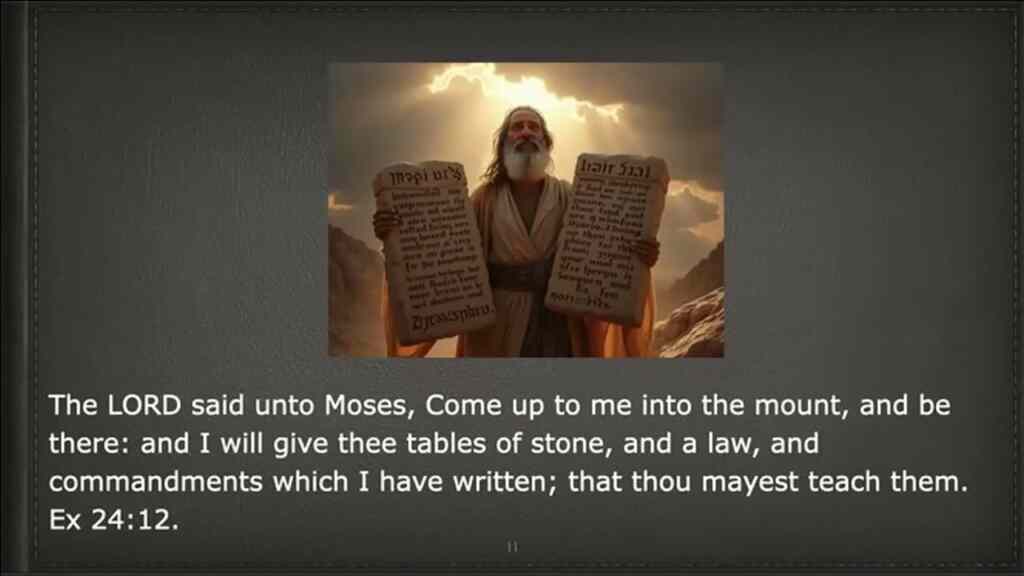
Moses he was he’s described as faithful and God described as faithful in all God’s house Stewarding Israel through the wilderness. David he stewarded Israel’s kingdom resources and prepared materials for temple construction. Caleb he stewarded his God given faith and warrior spirit for 45 years and at age 85 he claimed the land as an inheritance promise to him.
Nehemiah.
He stewarded resources and leadership to rebuild Jerusalem’s walls despite the opposition he faced. Abraham’s servant Eleazar who faithfully executed Abraham’s mission to find a wife for Isaac without compromising the instructions. Daniel who mained faithfulness to God’s law while stewarding political responsibilities under foreign kings. Shadrach, Meshach and Abednego faithfully stewarded their testimony by refusing to compromise worship even under the threat of death. Barnabas he faithfully stewarded his property by selling land and giving proceeds to the apostles for ministry’s needs.
And the widow of Zarephath In a profound act of trust, she stewarded her last handful of flour and little oil by giving it to Elijah first, and her faithfulness resulted in God’s continuous provision throughout the famine. King Josiah upon discovering the Book of the Law, he became a faithful steward of national repentance. He aggressively reformed Judah, removing idols and restoring proper worship, stewarding the spiritual health of the entire nation.
Ezra he was a scribe who devoted himself to the study and observance of the law of the Lord and to teach us decrees and laws in Israel. He was a meticulous steward of God’s Word itself. Then we have Timothy who faithfully stewarded the Gospel’s message and Paul’s teachings protecting them from corruption in Job after losing everything, Job’s stewardship was reflected in his unwavering integrity. The Lord gave and the Lord has taken away. May the name of the Lord be praised.
He faithfully stewarded his testimony through unimaginable sufferings. John the Baptist, the ultimate steward who understood his role was to prepare the way for Christ. He famously said, he must become greater and I must become less, perfectly stewarding his influence and platform for its true purpose. Noah, a steward of divine commission. For decades he faithfully managed the enormous task of building the ark and preserving life according to God’s precise instructions, despite public ridicule.
From reprint 1158 we read, if God declares that a flood is coming and commands the building of an ark, the reasonable course is to build and to warn men, though the flood and every indication of it should tarry for a hundred and twenty years. That’s how long Moses was preparing the ark and warning those about him. The poor widow Jesus highlighted her as a superior steward of her finances. Though she gave two small coins, she gave all she had, demonstrating complete trust in God’s provision, and perhaps among the greatest examples would come from Matthew 24.
Among the greatest examples anyway would come from Matthew 24:45, pointing to that faithful steward servant rather, which I believe to be a reference to that wise and faithful servant. Pastor Russell, who then is a faithful and wise servant who whom his Lord hath made ruler over his household to give them meat in due season, described in the sixth volume, page 613, as being faithful to the master and to his fellow servants and the household. Now, these examples given emphasize managing time, talents, resources, responsibilities with wisdom, integrity and accountability to God. Stewardship in Scripture encompasses both material and spiritual responsibilities entrusted by God. They show that faithful stewardship is not about the size of the resource, but the faithfulness of the heart in managing whatever God has entrusted, whether it’s a nation, a ministry, a testimony or two small coins.
And may these stewardship examples be an inspiration to each of us to be more faithful, to use those things entrusted to our care as we go forward in this narrow way, and at this time I’d like to introduce you to a poem entitled Faithful Stewards, written by Ed Ostrom. As a follower of the Lord here today, I am required to be a faithful steward. Each day. My stewardship is day by day a valid test of my service for the Lord, as in him I now rest, God tests my fitness for the blessings I believe, discerning how I handle the little things I receive Being faithful in little I will be trusted with more in his glorious blessings like an eagle will I soar if I am faithful in my service I will find his loving presence in me blessing me so sublime if I prove here now to be unfaithful I know I will be miserable and defeated here below Lord make my service a precious treasure Help me treat my stewardship with special measure with fully committed heart I serve you day by day I long to faithfully serve you along life’s pathway A faithful steward of Jesus helped me be loyally serving you guided on to victory O Lord Jesus I serve you with my heart of love Pour out your rich blessings on me from heaven above Lord I cannot serve you do an evil Today I want to faithfully serve you along ice pathway A faithful steward Lord Jesus make me I pray Faithful stewardship is my life’s real mission today May the Lord add his blessing.
Click Here for the PDF transcript.