This transcript was generated automatically. Its accuracy may vary
Short Summary
The discourse examines the repeated instances of Israel’s complaints and temptations of God during their 40-year wilderness journey from Egypt to the Promised Land, highlighting how these events serve as spiritual lessons for the Church. It emphasizes the consequences of Israel’s lack of faith, culminating in thei...
This transcript was generated automatically. Its accuracy may vary
Short Summary
The discourse examines the repeated instances of Israel’s complaints and temptations of God during their 40-year wilderness journey from Egypt to the Promised Land, highlighting how these events serve as spiritual lessons for the Church. It emphasizes the consequences of Israel’s lack of faith, culminating in their exclusion from entering the Promised Land, and draws parallels between these historical events and Christian teachings about endurance, faith, and the role of Jesus as mediator. The message concludes with a call to remain faithful and avoid the pitfalls of unbelief and rebellion exemplified by Israel.
Long Summary
Detailed Summary of the Discourse on Tempting God: Lessons from Israel’s Wilderness Journey
Introduction: Setting the Topic
– The phrase “tempting God” often brings to mind Satan’s temptation of Jesus at the Temple Mount (Matthew 4:5-7), but this discourse focuses instead on Israel’s repeated temptations of God during their 40 years in the wilderness after leaving Egypt.
– This period is about 40 years of the approximately 200-year span from Jacob’s family leaving Egypt to the conquest of Canaan under Joshua and Caleb.
– The discourse draws parallels between Israel’s experiences and the Christian Church, viewing Egypt as the sinful world the Church leaves, led by Jesus as Redeemer (typified by Moses).
Typology: Israel’s Wilderness Journey as a Spiritual Lesson
– Egypt symbolizes the sinful world; Israel’s deliverance parallels the Church’s redemption through Jesus.
– The wilderness represents the Christian condition post-consecration: not sinning but still vulnerable to worldly influences.
– Paul’s teaching in 1 Corinthians 10:1-6 is central: Israel’s experiences are examples for Christians to avoid craving evil, idolatry, immorality, testing God, and grumbling.
– The “spiritual rock” mentioned in 1 Corinthians 10:4 is Christ, who provided spiritual sustenance.
Chronological Review of Israel’s Temptations and Lessons
1. Crossing the Red Sea and Fear of Death (Exodus 14:10-14)
– Israel complains fearing death in the wilderness.
– Moses reassures them; God miraculously parts the sea and destroys the Egyptians.
– Despite witnessing God’s power, Israel quickly loses faith and longs for Egypt’s slavery over trusting God’s provision.
2. Bitter Water at Marah and God’s Healing Provision (Exodus 15:22-27)
– After three days without water, the water at Marah is bitter.
– Moses intercedes; God makes the water sweet by a tree thrown into it (symbolizing the cross of Christ, Galatians 3:13).
– God establishes statutes and tests Israel’s obedience, promising healing.
3. Manna from Heaven and Testing Obedience (Exodus 16)
– The people grumble about hunger, reminiscing about Egypt’s food.
– God provides manna daily, testing their obedience to gather only a day’s portion except before Sabbath.
– Some disobey by hoarding manna; it spoils and breeds worms, angering Moses.
– Sabbath regulations introduced, emphasizing rest and trust in God.
4. Water from the Rock at Rephidim (Exodus 17:1-7)
– Again, Israel complains about lack of water.
– God instructs Moses to strike the rock at Horeb, producing water.
– This rock typifies Christ, smitten to provide “water of life” (1 Corinthians 10:4).
– The place is named Masah and Meribah, meaning “tempting God” and “strife” due to Israel’s testing.
5. Idolatry at Sinai – The Golden Calf (Exodus 32)
– Moses delays on Mount Sinai; people doubt and demand idolatry.
– Aaron fashions a golden calf; this is the seventh and most serious temptation.
– God threatens to destroy Israel and start anew with Moses alone.
– Moses intercedes, showing mediatorial character akin to Christ.
– About 3,000 rebels killed by Levites; punishment for tempting God becomes severe.
6. Complaints at Taberah (Numbers 11:1-3)
– People complain again; God’s anger burns, consuming some by fire.
– They cry to Moses; fire subsides.
– This episode symbolizes spiritual rebellion and apostasy, risking loss of justification and redemption.
7. Demand for Meat and Appointment of Elders (Numbers 11:4-35)
– Israelites crave meat, lamenting manna monotony.
– Moses is overwhelmed, asking God to relieve his burden or kill him.
– God appoints 70 elders to share leadership; the spirit of Moses is imparted to them.
– God provides quail in abundance, but a severe plague follows due to greed.
– The event shows consequences of testing God’s provision.
8. Miriam and Aaron’s Rebellion (Numbers 12)
– Miriam and Aaron criticize Moses’ Cushite wife and question Moses’ unique prophetic authority.
– God punishes Miriam with leprosy; Moses intercedes for her healing.
– This challenges leadership and shows God’s protection over His chosen servant.
9. The Spies and the People’s Rebellion at Kadesh (Numbers 13-14)
– Twelve spies sent to Canaan; ten give a fearful report, two (Joshua and Caleb) give faithful encouragement.
– People rebel, threatening to stone leaders.
– God declares those over 20 who rebelled will not enter the Promised Land except Joshua and Caleb.
– Israel condemned to wander 40 years as punishment for testing God.
– This is counted as the tenth and final major temptation.
10. Rebellion of Korah (Numbers 16)
– Korah leads a rebellion against Moses and Aaron.
– Earth swallows rebels, but people murmur, invoking plague.
– Aaron intercedes; plague stops.
– Demonstrates consequences of rebellion and testing God’s appointed leadership.
11. Water at Kadesh and Moses’ Disobedience (Numbers 20:1-13)
– Miriam dies; people again lack water.
– God commands Moses to speak to the rock, but Moses strikes it twice.
– God punishes Moses and Aaron by barring them from entering the Promised Land.
– This failure typifies the sin of unbelief and presumption.
12. Serpents and the Bronze Serpent (Numbers 21:4-9)
– People complain again; God sends poisonous serpents.
– Moses intercedes; God instructs to make a bronze serpent on a pole.
– Those who look at it live.
– Symbolizes Christ lifted up for salvation (John 3:14-15; Isaiah 53:5).
Summary and Spiritual Lessons
– Israel tempted God ten times in the wilderness, with increasing severity and consequences.
– The experiences serve as examples for Christians to avoid craving evil, idolatry, immorality, testing God, and grumbling (1 Corinthians 10:6, 12-13).
– The final punishment: those who failed faith died in the wilderness, typifying the second death for those who fail the test of faith.
– Encouragement from Hebrews 3:7-9, 12-14 to not harden hearts or fall away, but to hold fast to Christ.
– The discourse closes with a prayer for faithfulness and perseverance in consecration.
—
Key Bible Verses Referenced:
1 Corinthians 10:1-6, 12-13
– Examples to avoid craving evil, idolatry, immorality, testing God, and grumbling.
– “Now these things happened to them as an example, but they were written down for our instruction…”
Exodus 14:10-14
– Israel’s fear at Red Sea crossing and Moses’ reassurance.
Exodus 15:22-27
– Bitter water made sweet at Marah.
Exodus 16
– Manna provision and Sabbath instructions.
Exodus 17:1-7
– Water from the rock at Horeb; rock = Christ (1 Corinthians 10:4).
Exodus 32
– Golden calf idolatry and Moses’ intercession.
Numbers 11:1-3
– Fire at Taberah for complaints.
Numbers 11:4-35
– Manna dissatisfaction, quail provision, and appointment of 70 elders.
Numbers 12
– Miriam’s leprosy for rebelling against Moses.
Numbers 13-14
– Spies’ report, rebellion, and God’s judgment.
Numbers 16
– Korah’s rebellion and divine judgment.
Numbers 20:1-13
– Moses smites rock instead of speaking; barred from Promised Land.
Numbers 21:4-9
– Bronze serpent lifted up; Christ typified (John 3:14-15).
Hebrews 3:7-9, 12-14
– Warning to not harden hearts or fall away.
Galatians 3:13
– Christ redeemed us from the curse by being cursed (the cross).
John 3:14-15
– Christ lifted up as the serpent for salvation.
Isaiah 53:5
– Christ wounded for our transgressions.
—
This discourse reminds believers that the wilderness experiences of Israel are rich with spiritual lessons—warning against repeated failures of faith and encouraging steadfast trust in God’s provision and leadership through Christ. It highlights the seriousness of “tempting God” and the mercy available through a faithful mediator.
Transcript
Our topic. So let’s begin our discussion.
When we hear the phrase tempting God, most of us are most prone to think of the second temptation of our Lord by Satan, suggesting that he cast himself down from the Temple Mount, in which case the angels would have saved him and the people should have then instantly accepted him and as the Son of God. But this is not our subject in the Convention’s opening discourse. Brother Jerry, in treating Jacob’s trouble, reminded us of the approximate 200 years that transpired between Jacob and his family leaving and the ultimate return of the nation to the Promised Land under Moses leadership through the wilderness and the conquering of the land under Joshua and Caleb. It is the last 40 years of that period that we will focus on this afternoon.
We will focus on the repeated instances of Israel railing and complaining about the situation they found themselves in, as they endured admittedly the less than ideal conditions while journeying toward the Promised Land.
The experiences of Moses and Israel are typical of that of Jesus and the Church. Egypt represents the sinful world the church leaves as the antitypical firstborn passed over during the age, just as the firstborn of Israel were passed over in the 10th plague. They escaped a dying condition through the merit of the Redeemer and their advocate Jesus. Moses has this role in the type, and while they leave the antitypical Egypt, they do not go directly to paradise, the antitypical Canaan.
No, they go to the wilderness, representing the condition of the new creature out of Egypt, not participating willingly in the lusts of sin in the world, but still liable to the effects of the world around them, and susceptible to the pitfalls of being in the world, but not of it, as we have seen in countless examples in Scripture, that these experiences were absolutely necessary for natural Israel, and they do provide spiritual Israel some antitypical lessons. This is one which we have much confidence. But why? Paul tells us that this is an example for us in First Corinthians 10, the first six verses for I do not want you to be unaware, brethren, that our fathers were all under the cloud and passed through the sea, and all were baptized into Moses in the cloud and in the sea and all ate the same spiritual food, and all drank the same spiritual drink for they were drinking from a spiritual rock which followed them, and the rock was Christ. Nevertheless, with most of them God was not well pleased, for they were laid low in the wilderness.
Now these things happened as an example for us that we should not crave evil things, as they also craved.
Our tracing of these events begins at the Red Sea. After all the years of captivity and the endurance of the last seven of the 10 plagues visited upon the nation of Israel, the Israelites, most significantly the firstborn survived that last plague, the death of the firstborn of those residing without the blood of the lamb on their doorpost. They leave Goshen and journey for their first encampment and the western shores of the Red Sea. The Lord instructed them to take this route to avoid the Philistine territory and the battles which would have ensued had they gone that way. That being across the northern part of the Sinai Peninsula, this way would have been much shorter, but it would not have taken them to Mount Sinai.
And you can see the route right here. We won’t refer to this map the rest of the time we’re on, but the interesting part of it is that the you see, after they left Egypt and journeyed to the southern tip of Sinai, when they came back up toward the land, they had to double back toward the tip of the Gulf of Aqaba. That’s the right hand fork of those two forks at the bottom of the Red Sea, and then had to go around on the east side of Edom. We’ll talk about that at the end of our Talk.
Foreign Exodus 14:10 through 14 and we will will soon be familiar with the complaint that the nation of Israel makes constantly. Verse 10 as the Pharaoh drew near, the sons of Israel looked and behold, the Egyptians were marching after them and they became very frightened. So the sons of Israel cried out to the Lord and and they said to Moses, is it because there were no graves in Egypt that you have taken us away to die in the wilderness? They seem to be concerned about dying in the wilderness. Why have you dealt with us in this way, bringing us out of Egypt?
Is this not the word that we spoke to you in Egypt saying leave us alone that we may serve the Egyptians, for it would have been better for us to serve the Egyptians than to die in the wilderness. But Moses said to the people, do not fear, stand by and see the salvation of the Lord, which he will accomplish for you today. For the Egyptians whom you have seen today, you will never see them again forever. The Lord will fight for you while you keep silent. Already they were fearful and unwilling to take on the experiences of the wilderness, instead preferring the pleasures of Egypt.
Egypt even at the cost of their enslavement. How short lived their faith was. Seeing how they had all witnessed God fighting for them the very first opportunity to step out in faith, they fail and long for the security of the life of a slave in Egypt. The Lord would provide for the nation the most miraculous and incredible demonstration of his willingness to fight for the people. The deliverance from the angel of Death and the parting of the sea allowed the nation to cross over Dryshot, and the pursuing Egyptian army was destroyed in the restrained waters.
Release. The nation thus pushed on into the wilderness of Sinai. The Israelites did a little better after crossing the Red Sea. It took a whole three days before they murmured about the conditions they were experiencing in the wilderness. Then Moses led Israel from the Red Sea, and they went out into the wilderness of Shur, and they went three days in the wilderness and found no water.
And when they came to Marah, they could not drink the waters of Marah. They were bitter. Therefore it was named Marah, and so the people grumbled at Moses, saying, well, what shall we drink? Moses took to heart the distress of the people and those people were feeling and petitioned God for relief.
Then he cried out to the Lord, and the Lord showed him a tree, and he threw it into the waters, and the waters became sweet. There he made for them a statue and a regulation, and there he tested them, and he said, if you will give earnest heed to the voice of your God, and do what is right in his sight, and give ear to his commandments, and keep his statutes, I will put none of the diseases on you which I have put on the Egyptians, for I, the Lord, am your healer, and then they came to Elim, where there were 12 springs of water and 70 day palms, and they camped there beside the waters. Sounded like they had a pretty cushy place to reside, at least for that period of time.
Brother Russell comments that the three 24 hour days spoken of here are typical of the parts of the 5th, 6th and 7th thousand year days over which the Gospel age spans. I think our Lord would have only though intended this as a secondary lesson. We prefer another application that is alluded to in reprint 30, 35 and also in reprint 5278, focusing more on the nearness of the time when they left Egypt. Reprint 30, 35. The Spiritual Israelite is not long out of Egypt before he is permitted to have trying experiences and seeking refreshment.
He perhaps finds bitter disappointments. But those disappointments can be made sweet when the tree is added to the water, the tree being typical of the cross of Christ. Galatians 3:13.
Moving on to the 16th chapter of Exodus, we find the next murmuring and rebellion of the people. Most appropriately, they were now in the wilderness of sin on the western edge of the Sinai peninsula. About halfway between their crossing of the Red Sea and Mount Sinai, which is near the southern tip of the peninsula. It is now about a month and a half since they left Egypt, and while the water ran out relatively quickly, the food they brought with them apparently lasted about six weeks. Before we go into the murmuring here, we might point out positively to their faith in going on such a journey without really bringing enough food for the entire journey.
I know that if I were going on a camping trip, even for a few weeks, the thing I probably would be mainly concerned about is bringing enough food to survive.
Wilderness of sin In Exodus 16, we’ll read verses 2 through 4 and the whole congregation of the sons of Israel grumbled against Moses and Aaron in the wilderness, and the sons of Israel said to them, would you that we had died by the Lord’s hand in the land of Egypt, when we sat by the pots of meat, when we ate bread to the full, for you have brought us out into this wilderness to kill the whole assembly with hunger, and then the Lord said to Moses, behold, I will rain bread from heaven for you, and the people shall go out and gather a day’s portion every day that I may test them whether or not they will walk in my instruction without even a prayer from Moses. God provides for the people’s hunger. The Lord provided for Israel, as he provides for us manna from heaven, the sustaining food for life.
The manna provided for Israelites typically and for us anatypically, was not fast food ready to eat. The grains were small and white, required painstaking labor to gather, and had to be boiled or baked before they could be consumed. This manna was wholly sufficient for their bodily needs and had some unique characteristics about it, qualities that added to Israel’s appreciation of it and another anatypical picture. The manna that fell the day after, up until two days before the Sabbath, lasted for exactly one day before it would go bad and rot. The manna that fell before the Sabbath would be good for two days.
Thus the people could only gather one day’s supply at a time, except on the day before the Sabbath, when they could gather two days worth. The manna was not in the fields on the Sabbath, in case you haven’t been counting. This murmuring for food was the third instance of complaining. There is significance to the number of these, and we’ll talk about them a little bit later. But let’s look into the 16th chapter of Exodus where the narrative picks up.
Even though Moses clearly spelled out the terms for the manna, small groups of people rebelled even against Such simple and reasonable instructions we’ll pick up with verse 20 and read 27, 28. But they did not listen to Moses, and some left part of it until morning, and it bred worms and became foul, and Moses was angry with them, and it came about on the seventh day that some of the people went out together, but they found none.
And then the Lord said to Moses, how long do you refuse to keep my commandments and my instructions, not speaking directly to Moses, but to the people? See, the Lord has given you the Sabbath, therefore he gives you bread for two days. On the sixth day, remain every man in his place. Let no man go out of his place on the seventh day.
The next stop on the journey was just north of Mount Sinai at Rephidim. We find this in the 17th chapter of Exodus, and again the issue is water for the nation. Exodus verses chapter 17, verses 1 through 3. Then all the congregation of the sons of Israel journeyed by the stages from the wilderness of sin, according to the command of the Lord, encamped at Rephidim.
And there was no water for the people to drink. Therefore the people quarreled with Moses and said, give us water that we may drink, and Moses said to them, why do you quarrel with me? Why do you test the Lord? But the people thirsted there for water.
They grumbled against Moses and said, why now have you brought us out of Egypt to kill us and our children and our livestock with thirst? This constant refrain of, why did you take us out of Egypt to die here in the desert?
It seems by this point Moses is less than sympathetic to the complaints of the people. Verse 4. So the Moses cried out to the Lord and said, what shall I do with these people? A little bit more and they will stone me. Do you sense that maybe Moses was just about ready to pull his hair out at this time?
Verse 5. Then the Lord said to Moses, pass before the people and take with you some of the elders of Israel, and take in your hand your staff, which you struck the Nile, and go, behold, I will stand before you, and there on the rock at Horeb, and you shall strike the rock, and water will come out of it that the people may drink, and Moses did so in the sight of the elders of Israel.
Although this request was again for water, the method in which the water was provided was significantly different. In the earlier case, the water was an existing foul tasting supply that was made suitable for consumption. In this case, the water was miraculously provided by smiting of the rock. The rock pictures Christ, who was smitten in his first Advent. The water pictures the water of life which flows from him, and the ransom he provided not only for the church, but also for the world of mankind.
Paul confirmed this typical interpretation in our introductory passage of Scripture, 1st Corinthians 10:4, and all drank the same spiritual drink, for they were drinking from a spiritual rock which followed them, and the rock was Christ, and if this seems too minor to be considered tempting God, we only have to look at the names Moses chose for the place and his reasons. Verse 7 of the same chapter and he named the place Masah and Meribah because of the quarrel of the sons of Israel and because they tested the Lord, saying, is the Lord amongst us or not? Meribah means strife and Masah means the tempting of God.
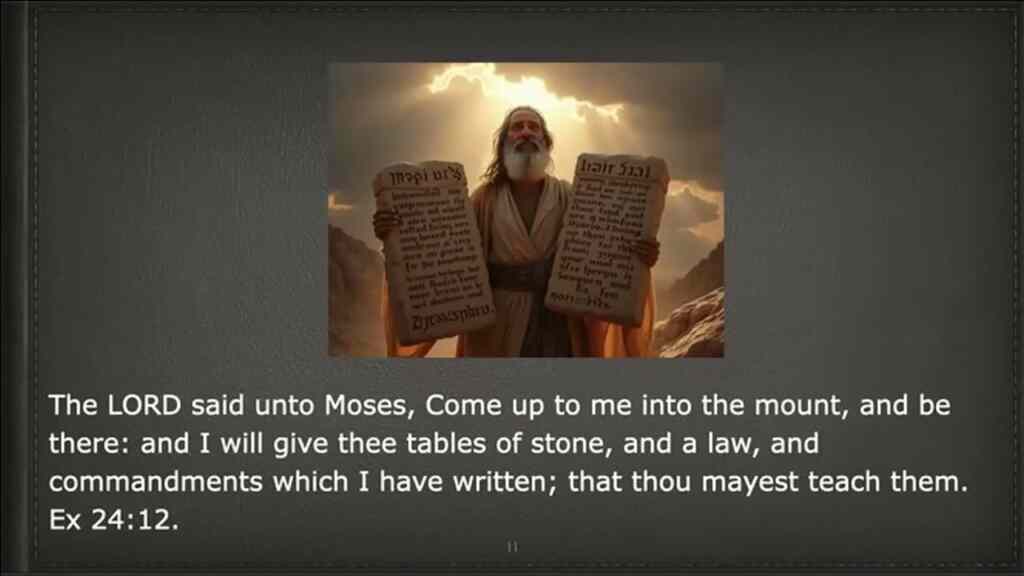
The nation moves on to Mount Sinai to receive the law of their God. You know the story well, and I’m sure as I’m sure so I won’t read it. But you can find it in the 32nd chapter of Exodus. Moses goes up to the mount, doesn’t return for an extended period of time. This gives those amongst the people with a rebellious spirit an opportunity to rumor that Moses must be dead or not coming back for some reason.
Doubly disappointing is the alternative of the people. They chose idolatry rather than seeking the Lord’s leading. Aaron, showing perhaps his most serious weakness of character, goes along and crafts the id. This is the seventh temptation, and at this point the seriousness of the matter is apparent. The Lord tells Moses he will destroy the entire nation and raise up another nation from Moses alone, fulfilling the type of the sympathetic high priest.
Moses asked for the Lord’s forgiveness, even though he uses decidedly human reasoning, worrying about what the people of Egypt would think if God destroyed the nation. Moses showed the the decidedly Christian characteristic, though of hating the sin of the people, but the ability to love and mediate for them. Verse 14 in the 32nd chapter says in the New American standard that God had changed his mind. The King James says that the Lord repented of evil, which he had thought to do. These don’t convey the right thought.
The more proper thought is that because of what Moses did, God determined what to do with the nation according to what he had previously determined and planned. In the antitype. Had there been no mediator for the world, there could have only been one result, and that would have been the destruction of the race. But because Jesus was the willing mediator, the human race will live. This is the seventh temptation and no longer are the consequences a simple rebuke in the midst of the Rebellion.
Moses calls for all those who are loyal to God, and the tribe of Levi responds without hesitation. From this point on, the nation will have those who would tempt the Lord severely punished or even executed.
Verse 27 of Exodus 32, and he said to them, thus said the Lord, says the Lord the the Lord thy God of Israel, every man of you put his sword upon his thigh and go back and forth from gate to gate in the camp and kill every man and his brother, and every man his friend, and every man his neighbor. So the sons of Levi did as Moses instructed, and about 3,000 men of the people fell that day. Verse 27 makes it sound like there will be only one tribe and not 12 after this purging. But verse 28 can only mean one thing, that Moses was instructing the Levites to slay the leaders of that insurrection.
For we are sure from the census figures in Numbers that there were more, many more, 3,000 men in the other 11 tribes. This seventh temptation is obviously the most serious to date, and consequently it marks a difference in the way the Lord will deal with this kind of behavior. Moses, again, true to being a type of our Lord, goes back to the Mount and offers his life in the stead of the nation of Israel. What a contrast of character between the two principles. In leadership of Israel, Aaron is seemingly easily compromised by a group of rebellious and jealous leaders amongst the tribes.
His brother Moses remains loyal to God both and to the nation, and offers his life in place of the nation’s destruction.
The remainder of Exodus, most of Leviticus and most of the first third of Numbers is devoted to regulations concerning the priesthood, the tabernacle, the law, its implementation, and associated ceremonies. We come across the next incident of tempting of God in the 11th chapter of Numbers. Although I couldn’t find Tabura, which is mentioned in the Scriptures on any of the maps I had based on numbers 3316 indicating that after they left Sinai they went to Kibroth Hadavah. That place is mentioned later in the Sen. Chapter. It’s reasonable that this episode took place probably just northeast of the Mount of Mount Sinai, and we’ll read about that in Numbers 11, Verses 1 through 3.
And now the people became like those who complained of adversity in the hearing of the Lord, and when the Lord heard of it, his anger was kindled, and the fire of the Lord burned among them and consumed some of the outskirts of the camp, and the people therefore cried to Moses, pray to the Lord, and the fire died out. So the name of that place is called Tabura because the fire of the Lord burnt amongst them. It could be reasonably argued from the information we have in the Scriptures that this was the least serious tempting yet.
But the consequences were consistent with the consequences at Sinai. The King James Version says, the people complained.
What did they do that was deserving of death by fire? Bulliger, in the companion Bible states that the Hebrew use of what is called an inverted noun indicates that the meaning is that the people turn their back in their hearts, and although seemingly an extreme severe punishment of this type, the anatypical significance is consistent with our understanding of our covenantal relationship with the Father. If we turn our back on our antitypical Moses, even if not accompanied with outward actions, we have forfeited our justification, our redemption, and consequently our life in second death. In our research we did not find a comment by Brother Russell on these verses, but it does seem a reasonable explanation.
The nation is now heading up the eastern coast of the Sinai Peninsula and parallel to and about maybe only 5 to 10 miles from the coast. They will make camp at Kibroth, Hadabah, verses 4 through 15 of verses 4 through 6 and verse 10 of Numbers 11, and the rabble who were among them had greedy desires, and also the sons of Israel wept again and said, who will give us meat to eat? First it was water, then it was bread, now it’s meat.
We remember the fish which we used to eat free in Egypt, the cucumbers and the melons and the leeks and the onions and the garlic. But now our appetite is gone. There is nothing at all to look at except this manna down to verse 10. Now Moses heard the people weeping throughout their families, each man at the doorway of his tent, and the anger of the Lord was kindled greatly, and Moses was displeased.
Verse 11. So Moses said to the Lord, why hast thou been so hard on thy servant? And why have I not found favor in thy sight, that thou has laid the burden of all the people on me? So Moses was feeling the heat after all this time. Was it I who conceived all this, all this people?
Was it I who brought them forth that thou shouldest say to me, carry them in your bosom, as a nurse carries a nursing infant to the land, which thou didst swear to their fathers? Where am I to get this meat to give all this to the people? For they weep before me, saying, give us meat that we may eat. I am alone not able to carry all the people. It is too burdensome for me.
So if thou art going to deal thus with me, please kill me at once. If I have found favor in thy sight, do not let me see my wretchedness. Moses truly sounds a little frustrated and forlorn with what must now seem the endless complaining of an immature group of children. He even tells the Lord to end his life. If he has been doing what the Lord would have him to do, he just can’t seem to take it anymore.
At this point, the overwhelming nature of the request for meat for the millions of the Israelites in the middle of the desert seems too much for him. But it is not too much for our God. The anatypical significance is not so much in the 15 verse, but the verses that follow it. Verse 16 the Lord therefore said to Moses, Gather for me 70 men from the elders of Israel, whom you know to be elders of the people and their officers, and bring them to the tent of the meeting and let them take their stand with you. Then I will come down and speak to you there, and I will take the spirit who is upon you and will put it upon them, and they shall bear the burden of the people with you, so that you shall not bear it alone.
Now the Jews claim this is beginning as the beginning of the Sanhedrin, and whether or not that is actually true or not, it does signify a difference in the way the Lord will deal with Moses. No longer is just an individual, but as the head of a governing body who will share this governing role with the other 70 a perfect type of how the Lord is not just the head, but the head of a body of followers, and as in the case of Moses, there is no jealousy in the sharing of power and authority with the body. It is welcome for what they can add to the development and the management and the pleasing of the nation.
The similarity with the Gospel age church is also found in that they received the same spirit which God had given to Moses. As the church is partakers of the same Holy Spirit that Jesus had. The acceptance of the 70 is shown in their prop in their prophesying in verse 25, much like the acceptance of those of the early church was indicated by their gift of prophecy and tongues. The result of this tempting of the Lord for flesh to eat results in the granting of the request, but again with the more serious consequences established at Sinai. The Jews get more than they bargained for, or to put it another way, too much of a good thing.
The Lord provided enough quail for them to gorge themselves for a month, literally till it was coming out of their noses. We won’t read it, but it’s in verse 20 down to verse 32, and the people spent all day and all night and all the next day and gathered the quail. He who gathered least gathered 10 homers, and they spread them out for themselves all about the camp, while the meat was still in there between their teeth.
And before it was chewed, the anger of the Lord was kindled against the people, and the Lord struck the people with a very severe plague, and so the name of the place was called Kebroth Hatavah, because they buried the people who had been greedy.
Even though Moses absolute authority over the nation had previously become shared with the 70 elders, the next stop at Hazeroth would generate another tempting of the Lord. Maybe because they were granted no part in the new ruling authority, or maybe they were so weak of character and easily influenced by others of the nation. Miriam and Aaron criticized Moses for his wife being another race and not a Jew. Then Miriam and Aaron spoke against Moses because of the cushite woman whom he had married, and they said, has the Lord indeed spoken only through Moses?
Has he not spoken through us as well? And the Lord heard it, and now the man Moses was very humble, more than any man who was on the face of the earth. Skipping down to verse nine.
So the anger of the Lord burned against them and he departed. But when the cloud had withdrawn from over the tent, behold, Miriam was leprous, as white as snow, and Aaron turned toward Miriam, Behold, she was leprous. Then Aaron said to Moses, o my Lord, I beg you, do not account this sin to us in which we have acted foolishly and which we have sinned. Oh, do not let her become like one dead whose flesh is half eaten away when he comes from his mother’s womb.
And Moses cried out to the Lord, oh God, heal her, I pray. Whether she was black or of Arabian descent, being non Jewish could have easily been the unjustified reason for the criticism of Moses by Miriam and Aaron. Brother Russell comments that this mixed marriage was planned by the Lord so that the prejudice of the people they would have had against any children of this union would keep them from wanting Moses children as his successors, as they were to look to the Lord and not to an earthly royal family for leadership. It is interesting to note that Miriam is mentioned before Aaron in the references to the two of them in this chapter. This would seem to indicate her as the instigator, especially when the victim and the nature of the punishment is considered.
They were, it seems, equally chastised by the Lord for undermining Moses authority. Miriam was the one smitten with leprosy. The spiting of Aaron with leprosy would have disqualified him for service as the high priest, and apparently not in the Lord’s plan.
This brings us to the 14th chapter of Numbers and the incident at Kadesh. This may be totally separate or a direct consequence of the undermining of Moses authority begun by Miriam and aaron in chapter 12. In any case, the spies had been sent out and brought back a mixed report of both a land flowing with milk and honey, but inhabited by Nephilim, or giants, and of the 12 that went to spy out the land, that being one from each tribe, only Joshua and Caleb brought back an honest assessment, and then Caleb quieted the people before Moses and said, we should by all means go up and take possession of it, for we shall surely overcome it.
But the men who had gone up with him said, we are not able to go up against the people, for they are too strong for us. So they gave out to the sons of Israel a bad report of the land which they had spied out, saying, the land which we have gone in spying out is a land that devours its inhabitants, and the people whom we saw in it are men of great size. There is also we saw the Nephilim. The sons of Anak are part of the Nephilim, and we came like grasshoppers in our sight.
And so we were in their sight.
It was by now to be expected that the familiar refrain of let’s go back to Egypt was sounded by those fearful of relying on the Lord for victory in overcoming the occupants of the land. Moses, Aaron, Joshua and Caleb did their best to convince the people to go on and take the land, for surely the Lord would give them the victory. It took 40 days to spy out the land, and it is estimated that Joshua traveled at least 300 miles in that time. That was moving for.
For the transportation means at that time, which was probably just walking, going the furthest to the. To the furthest northern extent of the promised land. But the people again undercut Moses authority, choosing to ignore the report of the spy in which he had valued most highly, and instead were threatening to stone the four who urged the people to follow the Lord’s leading.
God’s patience had been tried to the limit, and the Lord said to Moses, how long will this people spurn me? How long will they not believe in me, despite all the signs which I have performed in their midst? I will spite them with pestilence and dispossess them, and I will make you into a nation greater and mightier than they in verses 13 through 19, Moses petitions the Lord for yet another pardon for the nation, and that is granted.
But notice in verses 22 through 24, chapter 14. Surely all the men who have seen my glory and my signs which I performed in Egypt in the wilderness, yet have put to me to the test these 10 times he’s been keeping track and have not listened to my voice, shall by no means see the land which I swore to their fathers, nor shall any of those who spurned me see it. But my servant Caleb, because he has had a different spirit and has followed me fully, I will bring into the land which he entered, and his descendants shall take possession of it. The Lord had been counting the testings or temptings as rendered in the King James. This the 10th was the last straw, so to speak.
A complete number. It was an account of all 10 of these that the nation was made to wander in the wilderness one year for every day the spies took in the land.
Death in the wilderness. Numbers 14, 28, 30. Say to them, as I live, says the Lord, just as you have spoken in my hearing, so I will surely do to you. Your corpses shall fall in this wilderness. Even all of your numbered men, according to your complete number from 20 years old and upward who have grumbled against me, surely you shall have not come into the land which I swore to settle you except Caleb the son of Jeppanah, and Joshua the son of Nun.
We had mentioned before that as of the seventh tempting of the Lord, serious punishment was extracted for their tempting God. This was to be no exception the death of the current generations. The ones over 20 who had left the land would all die in the wilderness without seeing the promised land. At this time there were only four exceptions to this sentence. The four who wanted to go Moses, Aaron, Joshua, and Caleb.
At this point they were at Kadesh, less than 70 miles from the southern tip of the Dead Sea. But as a result of this, they would soon turn south away from the land and back into the Sinai wilderness.
You would think that by this time the lessons would have been learned. But there are at least three more temptings recorded in the wilderness. We have the rebellion of Korah in numbers 16, which we can’t take time to read, but we’ll leave it for you to research that after the rebels are destroyed by an earthquake and opening a fissure in the earth and swallowing up the rebels, the the very next day some of the people murmur against Moses and Aaron as having been responsible for the death of them. This seems to be reminiscent even of today of victim status of criminals that we see now. But the Lord would have none of that, striking the nation with some sort of deadly plague that required Aaron’s intervention and separation of the people to stop.
And at this point now, there’s a gap of over 37 years in the history of the wilderness experiences. The only information we have in the Scriptures is the places that they camped. None of the events are recorded.
As the narrative picks up again in the 20th chapter of Numbers, early in the 40th year of Wandering in the wilderness, the nation is headed north again toward the Promised Land and passing a second time through Kadesh, and it is here that Miriam dies, and at the same time, the people again murmur for lack of water. This becomes the incident which eliminates Moses and Aaron from being able to enter the land. They were instructed to get the rod.
They were specifically told to speak to the rock to produce water. But either due to carelessness or for maybe for emphasis in their anger and disappointment with the people, or perhaps due to a lack of faith in that lack of their faith, the rock was instead not spoken to, but smitten twice, and the Lord required that they die en route, ever so close, but not in the Promised Land. It’s also ironic that a Moses, who was called the meekest man in all the earth in Numbers 12, 3, as we read, implies that he, and not God, is providing the water to the people by smiting the rock. This is a warning to the church, typifying those who crucify the Son of God of flesh, committing the sin of death.
For your reference, Hebrews 6:4 through 6.
The final tempting of God occurs literally on the doorstep of the Promised Land. Winter. Wishing to enter the land from the east, crossing Jordan north of the Dead Sea would have meant the taking of the shortest route, going east from Mount Hore and then up the eastern coast of the Dead Sea would have required that they cross the land of Edom. Moses sent messengers, even asking for permission to cross the land, promising to stay on a prescribed route and not even taking water from any of the wells along the way, and even further, offering to pay a toll for the passage. But Edom refused.
And because of the strength of the Edomites, the nation was forced to go around Edom as they had had headed east. We are told that Aaron died as part of this journey. Apparently, this way around Edom was very hard to travel and long, and it caused the people to murmur and tempt the Lord for a final time.
So the people came to Moses and said, we have sinned, and because we have spoken against the Lord, and you intercede with the Lord, that he may remove the serpents from us, and Moses interceded for the people, and then the Lord said to Moses, make a fiery serpent and set it on a standard, and it shall come about that everyone who is bitten when he looks at it, he shall live, and Moses made a bronze serpent, set it on a standard, and it came about that even a serpent bit by any man when he looked to the bronze serpent, he lived.
You know, the Sinai region is home to many kinds of poisonous snakes, some with venom that attacks the nervous system, causing almost immediate paralysis and making the entire body feel on fire. We don’t have to speculate on the antitypical significance of this passage, for our Lord provided it for us in John 3:14, 15 and as Moses lifted up the serpent in the wilderness, even so must the Son of Man be lifted up, that whoever believes may in him have eternal life. Jesus was that antitypical serpent. The bronze or copper material that was made from symbolized his human perfection, and being supported on a wooden pole was symbolic of his crucifixion on a wooden cross. All the people bitten by the real serpent, suffering the fiery affliction of sin would have to gaze on him that was wounded for their transgressions.
You can see that reference for that in Isaiah 53:5.
In summary, we’ve looked at all the times that the nation of Israel tempted God. These started out as a relatively minor failures of faith in which we as antitypical Israelites are confronted with but at the tenth temptation or testing of God, the consequence was dying in the wilderness and not making it to the promised land, illustrative of those running for the prize of the high calling, completely failing their faith of test faith in God, and are relegated to the second death class to die in the desert. The three temptings that occur after the spying out of the land seem to indeed be specialized pictures, and not part of this generalized picture, and we can think of no better words to conclude with than the words of Paul, considering the antecipical significance of these wilderness experiences. First Corinthians 10:6, 12 now these things has happened for examples for us that we should not crave evil things, as they also also craved, and not be idolaters, as some of them were.
As it is written, the people sat down to eat, drink, and stood up to play. Nor let us act immorally, as some of them did, and the 23,000 fell in one day nor let us try the Lord, as some of them did, and were destroyed by spirits, Verse 10 nor grumble as some of them did, and were destroyed by the destroyer. Now these things happened to them as an example. They were written for our instruction upon whom the end of the ages have come. Therefore let him who thinks he stands take heed, lest he fall.
Hebrews 3, 7, 9 and 12 14. Therefore, just as the Holy Spirit says today, if you hear his voice, do not harden your hearts as when they provoked me, as in the day of trial in the wilderness, where your fathers tried me by testing me, and saw my works for 40 years. Take care, brethren, lest there should be in any one of you an evil, unbelieving heart in falling away from the living God. But encourage one another day after day, and as long as it is still called today, lest any one of you be hardened by the deceitfulness of sin. For we have become partakers of Christ, if we hold fast to the beginning of our assurance, firm until the end.
This is our prayer for you, and may the Lord continue to bless you as you pursue your course of consecration.
Click Here for the PDF transcript.