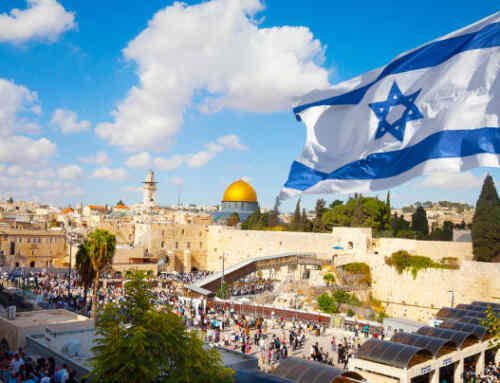
Zechariah 9:10–12 continues the prophecy that begins in verse 9, where the Messiah is pictured entering Jerusalem “lowly and riding upon a donkey.” Verse 9 points to Jesus’ first advent and his rejection by the nation of Israel at that time. Verses 10–12 then expand the picture to show both the consequences of that rejection and the ultimate hope of restoration under his future kingdom.
Verse 10 — God declares that He will “cut off the chariot from Ephraim and the horse from Jerusalem,” meaning that all instruments of war will be removed. Chariots, warhorses and bows represented human power and military strength; their removal symbolizes the end of human warfare altogether. Instead of conflict, the Messiah will “speak peace to the nations,” establishing a global government of righteousness, prosperity and stability. His dominion “from sea to sea, and from the river to the ends of the earth” describes the universal scope of Christ’s future kingdom—a world where nations no longer learn war and peace is enforced by divine authority.
Verse 11 — The prophecy then shifts to the basis of this future peace “because of the blood of My covenant with you.” This points to the sacrificial blood that seals the New Covenant, ultimately fulfilled in Jesus’ ransom sacrifice. God promises to “set your prisoners free from the waterless pit.” In ancient times, a dry cistern or pit was a place of death and hopelessness. Symbolically, it represents the grave. Through the blood of Christ, the prisoners of death will be released, a clear reference to the resurrection that will open the way for Israel and all humanity to return to life and learn righteousness.
Verse 12 — God then calls Israel, “Return to the stronghold, you prisoners of hope.” At Jesus’ first advent, Israel was under Roman rule and spiritually bound by sin, yet they still clung to the promises of deliverance. They were “prisoners of hope” held captive by their circumstances but also held by the hope of God’s covenant. The invitation to “return to the stronghold” is a call to return to Christ, their true refuge.
God adds, “Even today do I declare that I will restore double to you.” The Hebrew word mishneh means “a duplicate, a repetition, an equal portion.” This refers to the prophetic “double”—two equal periods in Israel’s national experience. The first was a long period of divine favor, ending with their rejection of the Messiah. The second was an equal period of disfavor and blindness, beginning at Jesus’ presentation as king in 33 AD and lasting 1,845 years until 1878.
First period of favor: from Jacob’s death to A.D.?33 (1,845?years).
Second period of disfavor: from A.D.?33?to?1878 (another 1,845?years).
With the “double” completed, the time for Israel’s restoration began, preparing them to eventually “look upon him whom they have pierced” and be reinstated to God’s favor.
In summary, Zechariah 9:10–12 moves from the Messiah’s rejection to His ultimate triumph. It foretells:
- the end of human warfare under Christ’s worldwide kingdom
- the release of humanity from death through the blood of the New Covenant
- Israel’s return to favor after their long “double” of disfavor
- the hope of full restoration when they finally recognize their Messiah
It is a prophecy of both judgment and hope, showing how God will transform Israel’s sorrow into blessing and extend peace to the entire world through the reign of the Prince of Peace.
Additional Resources:
Christian Questions Podcast
Episode 1275: “Why Did Jesus Ride Into Jerusalem?”
A comprehensive breakdown of the prophecy
Preview Video
CQ Rewind Show Notes
Episode 1346: “How Do We Understand the Rich Man and Lazarus?”
Jesus himself applied this prophecy during his ministry to explain the shifting favor of God
Preview Video
CQ Rewind Show Notes