This transcript was generated automatically. Its accuracy may vary
Short Summary
The discourse emphasizes the biblical concept of a “winter harvest,” portraying old age not as a decline but as a season of flourishing and fruitful service rooted in God’s strength, illustrated by the imagery of the cedar and palm trees from Psalm 92. It calls mature believers to embrace mentorship, passing...
This transcript was generated automatically. Its accuracy may vary
Short Summary
The discourse emphasizes the biblical concept of a “winter harvest,” portraying old age not as a decline but as a season of flourishing and fruitful service rooted in God’s strength, illustrated by the imagery of the cedar and palm trees from Psalm 92. It calls mature believers to embrace mentorship, passing on wisdom and spiritual capital to younger generations amidst a culture that undervalues age and spiritual growth, urging both seasoned saints to actively invest in the next generation and youth to seek godly mentors rather than worldly influences. Ultimately, it frames this intergenerational trust and discipleship as a sacred responsibility and a vital link in God’s ongoing redemptive plan.
Long Summary
Detailed Summary of the Discourse “Winter Harvest: Bearing Fruit When It Matters Most”
Theme and Scripture Focus:
– The discourse is centered on the concept of a “Winter Harvest,” a metaphor for fruitful spiritual growth and service in the later years of life.
– The main scripture is Psalm 92:12-15 (KJV):
*“The righteous shall flourish like the palm tree: he shall grow like a cedar in Lebanon. Those that be planted in the house of the Lord shall flourish in the courts of our God. They shall still bring forth fruit in old age; they shall be fat and flourishing; To shew that the Lord is upright: he is my rock, and there is no unrighteousness in him.”*
– This passage contrasts worldly views of aging with God’s promise of flourishing, fruitfulness, and vitality even in old age.
Imagery of the Cedar and Palm Tree:
– The cedar tree is described as ancient, strong, deeply rooted, scarred by weather, yet stable and enduring—symbolizing strength, longevity, and resilience.
– The palm tree, though old, still produces new clusters of sweet fruit, symbolizing ongoing fruitfulness and nourishment despite advanced age.
– Together, these trees illustrate a life “well lived” in God’s service—rooted in spiritual strength like the cedar and bearing fruit like the palm.
World’s Perspective on Aging vs. God’s Perspective:
– The world often sees old age as a decline, retirement, fragility, or an “ending.”
– In contrast, God views the “winter” of life as a time of purpose, potential, and usefulness.
– The promise is not mere survival or preservation but flourishing with “richness, abundance, and overflowing vitality.”
The Call for a “Winter Harvest”:
– The speaker urges a collective prayer: “Lord, grant us a winter harvest,” emphasizing a life that bears fruit and impacts others deeply in later years.
– The mature years are portrayed as sacred and divinely ordained for mentorship, teaching, and passing spiritual wisdom.
Cultural Critique and God’s Economy:
– Contemporary culture idolizes youth, speed, and novelty, often neglecting the value of wisdom and experience.
– God’s kingdom values “spiritual capital” accumulated over a lifetime—experience, faith, prayer, humility, and grace—which is likened to precious rubies that never lose value.
– This spiritual capital is meant to be shared generously with younger generations, nourishing them with “living water.”
Mentorship and Generational Trust:
– Effective mentorship requires deep trust, built by consistent, authentic living that matches spoken words.
– The relationship between mentor and mentee includes selfless interest, safety, encouragement, and truthful love.
– Biblical examples serve as a “gallery of winter heroes” showing how to pass faith to the next generation.
Biblical Examples of Fruitful “Winter” Lives:
Joseph: Despite betrayal, slavery, and imprisonment, Joseph flourished in old age as Pharaoh’s advisor, showing wisdom, grace, forgiveness, and trust in God’s sovereign plan (Genesis 50:20: *“Ye thought evil against me; but God meant it unto good.”*). His tolerance for uncertainty and faithfulness are highlighted.
Daniel: Maintained integrity and devotion in hostile pagan Babylon, trusted God through trials (including the lion’s den), and was called upon for wisdom in old age. His disciplined prayer life sustained him.
Moses: After 40 years leading Israel, he prepared Joshua as his successor through powerful farewell speeches (Deuteronomy), showing selfless legacy-building rather than clinging to power.
Elijah and Elisha: Elijah’s symbolic passing of the mantle to Elisha demonstrates the intimate relationship needed to empower successors, with Elisha asking for a “double portion” of Elijah’s spirit.
Peter and John: Peter transformed from impulsive denier to steadfast apostle urging believers to “grow in grace and in the knowledge of our Lord and Savior Jesus Christ” (2 Peter 3:18). His life testifies to God’s restorative mercy and grace. John, the beloved disciple, emphasized love, truth, discernment, and sound doctrine, warning believers to “try the spirits” (1 John 4:1).
The Danger of Broken Trust and Neglect:
– The failure of prophet Samuel to train his sons properly led to corruption and national spiritual decline.
– Eli’s weak rebuke of his sons’ wickedness led to divine judgment on his family line.
– These stories serve as warnings about the consequences of failing to nurture faith in the next generation.
Modern Crisis and Call to Action:
– Many young people today are influenced more by social media and ungodly mentors (“strangers on a screen”) than by godly elders.
– There is an urgent need for older believers to cast the “mantle” of mentorship rather than letting it gather dust.
– The speaker shares personal testimony of mentors who invested in him, emphasizing the invaluable impact of intentional mentorship.
– Discipline and obedience to God are key to resisting worldly “algorithms” and cultivating spiritual strength.
Dual Challenge:
– To seasoned saints: Your “most important assignment may still be ahead.” You are uniquely positioned to bear fruit now by sharing wisdom, testimony, and experience.
– To younger believers: Stop seeking mentorship from impersonal, worldly influences; instead, humbly seek out godly elders for guidance, stories, and prayer.
Conclusion and Encouragement:
– The cedar and palm do not worry or strive; they remain planted in God’s house, drawing life from Him, flourishing even in the “winter” of life.
– This season is not an end but a critical time to impart faith and legacy.
– The faithful life is “the ultimate sermon,” demonstrating God’s uprightness and faithfulness.
– The great “chain of faithfulness” linking biblical patriarchs and apostles to current believers rests now in our hands.
– The question: Will we be a strong link or a broken one? Will we cast the mantle or let it fall?
– The prayer to define our days:
*“Heavenly Father, let my life prove your faithfulness, and may we be found to be faithful laborers in His field until God’s kingdom appears before all mankind.”*
—
Key Bible Verses Referenced:
– Psalm 92:12-15
– Genesis 50:20
– 2 Peter 3:18
– 1 John 4:1
– Psalms 46:1-4
– Ecclesiastes (general reference)
—
Keywords and Concepts:
– Winter Harvest, Bearing Fruit in Old Age, Psalm 92, Cedar Tree, Palm Tree, Spiritual Flourishing, Mentorship, Generational Trust, Spiritual Capital, Wisdom, Integrity, Discipleship, Legacy, Biblical Examples (Joseph, Daniel, Moses, Elijah, Elisha, Peter, John), Restoration, Grace, Discernment, Social Media Crisis, Casting the Mantle, Discipline, Faithfulness, Spiritual Legacy, Chain of Faithfulness, God’s Uprightness, Final Harvest, Prayer for Fruitfulness.
Transcript
The title of our service is called the Winter Harvest. The subtitle is Bearing Fruit When It Matters Most. Now, a lot of times we think of when the winter comes, the harvest is over, and this is what Matthew 24 says, and our Lord’s great prophecy. But we’re going to talk about another winter harvest, and we’re going to the scripture that we’re going to concentrate on is Psalms, chapter 92, verses 12 through 15. That’s Psalm 92, verses 12 through 15.
And this is how it reads. The righteous shall flourish like the palm tree. He shall grow like a cedar in Lebanon. Those that be planted in the house of the Lord shall flourish in the courts of our God. They shall still bring forth fruit in old age, and they shall be fat and flourishing to show that the Lord is upright.
He is my rock, and there is no unrighteousness in Him. I’d like you to picture a tree in your mind’s eye. Not just any tree, but a great old cedar standing alone on a high ridge. This cedar’s trunk is massive and it’s gnarled and it’s scarred. It’s scarred from centuries of relentless wind and weather.
Its roots, they’re not seen, but they’re deep and they grip the rock, and their roots of this tree is an anchor of unyielding strength. Its branches are broad and powerful, and its branches have provided shade for generations of shepherds. This tree is in its winter of life, yet it stands not as a monument to decay, but it stands as a living testament to unshakable strength, to a living testament of stability and longevity. Now shift your mind’s eye for a minute to a palm tree in the middle of an oasis.
This palm tree too is old. Its trunk is a living history book. It bears the marks of a hundred seasons of fruit. Yet even now, in its advanced age, high among its weathered fronds, a new cluster of dates is forming. Dates that are rich and sweet with the promise of nourishment.
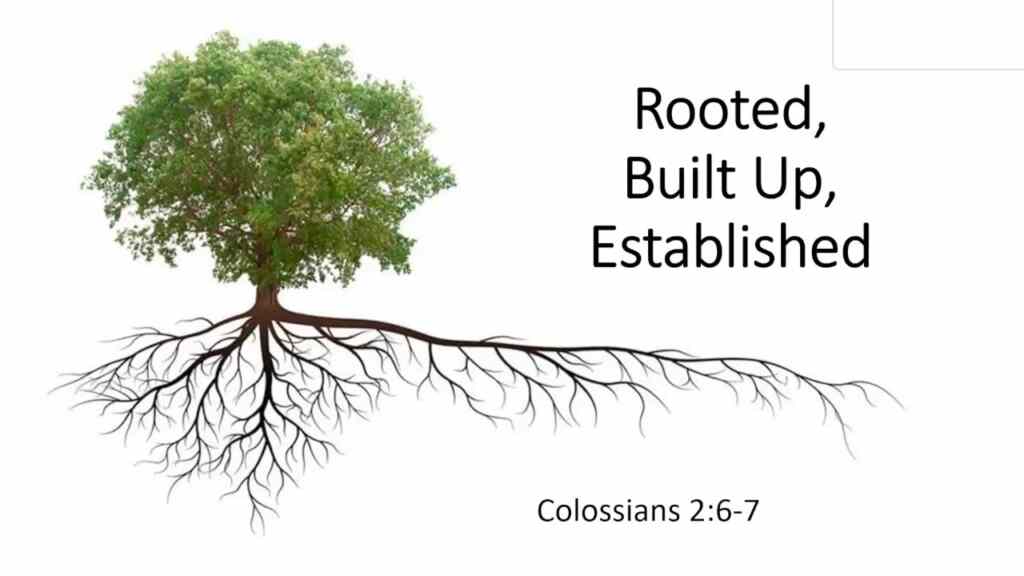
It continues to bring forth fruit, a source of life and sustenance in the midst of a dry and a weary wilderness. My dear brethren, these two trees, the cedar and the palm, are what’s spoken about in Psalm 92. They give us a profound God given picture of a life well lived in God’s service. This is a life that we should aspire to live. It is a life that is at its very core, rooted like the cedar and fruitful like the palm.
Now we live in the world, and the world, in its limited wisdom, really looks at Age as the winter of life, and it sees an ending. The world sees an ending to our life. It sees decline. It sees retirement.
It sees fragility. It sees a slow and inexorable fade into irrelevance. It sees the gnarled bark in the weathered branches and thinks, you know, it’s best days are over. It sees a season to be managed like a problem to be solved with maybe retirement homes, maybe with facelifts, and maybe with pension plans. But God, our creator and the author of our days, he looks at that time as something else.
He looks at that same tree, at that same life, and he sees something totally different. Our Heavenly Father sees purpose. He sees potential, and he sees usefulness. So let’s reconnect with the psalmist who gives us God’s perspective on this winter season of our life. Psalm 92:12, 15.
The righteous shall flourish like the palm tree. That’s you. He shall grow like a cedar. That’s you. That’s cedar in Lebanon.
Those that he be planted in the house of the Lord shall flourish in the courts of our God. They shall still bring forth fruit in old age, and they shall be fat and flourishing to show that the Lord is upright. He is my rock, and there is no unrighteousness in him. So let’s take a look at that promise this afternoon. This is not a gentle suggestion.
It’s a declaration from our Heavenly Father. The promise is not that we will simply survive in our old age. The promise is not that we will be preserved like a museum piece. The promise is that we will flourish, that we will be fat, and that word in Hebrew signifies richness, abundance, and overwhelming or overflowing vitality.
That we will still bring forth fruit.
Hmm, that’s a beautiful hope. But it’s a beautiful promise, isn’t it? God’s plan for the winter of our life is not a graceful decline into the sunset. It’s a glorious, final and most critical harvest. So this afternoon let’s make our collective heartfelt prayer, a plea that rises from every consecrated heart in this zoom meeting.
Lord, grant us a winter harvest.
So today we are going to explore the sacred God ordained purpose for the mature years of a consecrated life. It is a purpose that the world has forgotten, a purpose that our culture is desperate for, and a purpose that God has called each and every one of us to embrace with renewed vision. It’s the trust of sacred mentorship we must first be discerning about the world in which we live. Our society is no good, and it has a fundamental, deeply flawed Misunderstanding of age.
Our society worships at the altar of youth. It values speed over wisdom. It values fleeting innovation over time, tested experience, and it values the new things over the enduring things. But God’s kingdom, it operates on an entirely different economy.
In God’s economy, the spiritual capital accumulated over a lifetime of walking with him is the most valuable currency there is.
This is like rubies, the value of rubies, which was the main currency that was used in trade, international trade, because rubies never lost their value.
Our experiences, both failures that taught us humility and triumphs that taught us his grace. Our long fought secret battles with our own flesh, our quiet early morning moments of communion with our Heavenly Father. These have formed within us a deep wellspring of strength. Now that wellspring is not just for you. It’s living water meant to nourish the generation that follows, not only in God’s kingdom, but the generation that we have before us today.
Out of our belly shall flow. Out of, out of. From us will shall flow bellies of living water. That’s for today as well, and this is the divine design.
It’s the fruit that we have cultivated for a lifetime. The fruit of righteousness, the fruit of love, the fruit of mercy and the fruit of impartiality. It’s, it’s really meant to be shared. It is the sweetest fruit grown in the long, slow sunshine of God’s unending faithfulness. But this harvest requires sowers and it requires reapers.
It requires an intentional connection between the generations. A sacred relationship built on a single non negotiable foundation. That’s the foundation of trust. Now this is not the superficial trust of a business transaction where you shake hands or even have a contract. It’s the profound trust that is built when a younger believer sees a life that matches the words being spoken.
It’s when a younger believer sees a life that matches the words that that believer speaks.
It is the true trust that blossoms when a student feels safe and feels the mentor’s sincere, selfless interest in their spiritual growth. Now, thankfully, God has not left us, left us without a map. He’s given us a great cloud of witnesses. A gallery of winter heroes, if you will, and this gallery of winto winter heroes.
Show us exactly how it’s done. How we can pass the torch of faith to the next generation. How we can live our words and demonstrate through our actions to the next generation, and as we walk through this sacred gallery of the great cloud of witnesses, let us remember that our purpose is really to draw from their story to our strength. First we see the legacy of wisdom and integrity that’s painted for us in the lives of Joseph and Daniel.
Let’s look at Joseph in our mind’s eye. Joseph was a crucible of betrayal. Joseph’s life was a crucible of slavery and unjust imprisonment. Yet in the winter of his life, he was Pharaoh’s number two, and he did not wield that power with bitterness.
He did not wield that power with the use of power on other people. He used that power for breathtaking wisdom and grace, and he used his God given ability to implement a far sighted administrative plan that actually saved generations from famine. Not only the famine of food, but the famine of the word of the Lord and the promise that was given to his grandfather, great grandfather Abraham.
But Joseph’s greatest wisdom was displayed in his heart. Joseph looked at his brothers who had sold him into slavery, and instead of seeing perpetrators deserving of vengeance, he saw instruments in the hands of a sovereign God. He declared to them in Genesis chapter 50, verse 20. He said, Ye thought evil against me, but God meant it unto good.
Now this is the wisdom. This is the testimony of mature faith, the ability to see God’s purpose even in his deepest pain, and at the end of Joseph’s life, his final act of faith was not really about his power, but it was about his future hope. On his deathbed, Joseph made his son swear an oath to carry his bones back to the promised land, and that promise that he demanded from his children was an unwavering belief in God’s promise to restore Israel to their actual land and that God’s promises were real.
So even after he died, he would testify of his faith and of God’s faithfulness to his sons in powerful ways. Very primal visceral experience for his children to think about the faith of their father that made them swear to take his bones back to the promised land.
An underrated skill that Joseph showed us in his testimony of his life is his tolerance for uncertainty, and the greatest rewards in Joseph’s life actually came to him because he showed up every day when the future was uncertain. Now I, believe me, I know what that’s like because I’m in sales.
And Joseph showed us that the ones who can trust God in God’s promises, even when tolerating the most uncertainty, those are the ones who have a great chance of thriving now beside Joseph, in our mind’s eye, let’s turn to Daniel. Daniel was thrown into the heart of the pagan political machinery of Babylon as a young man, much like we are done today in the antitypical political machinery of antitypical Babylon. But Daniel purposed in his heart that he would not defile himself, and for decades, through the rise and fall of multiple kings and empires, Daniel was a beacon of impeccable integrity. Ever notice this?
There’s really nothing bad said about Daniel or Joseph. That’s a big idea. In Daniel’s old age, he was not put out to pasture. He was the one that the king called when the terrifying supernatural handwriting appeared on the wall. Mini mene Tekelupharson.
Now, why did the king call Daniel? Well, it’s because of a lifetime of disciplined devotion, and this lifetime of disciplined devotion had cultivated a spiritual discernment that did not fade, but flourished with Daniel’s age. Now Daniel was sustained by a lifelong discipline of prayer that not even the threat of a den of hungry lions could break. I don’t know if I could do that den of hungry lions.
But maybe through God’s strength.
Next, in our mind’s eye, we see the legacy of succession demonstrated by Moses and Elijah, and this is one of the most beautiful and perhaps most difficult callings of our winter season of life. Because we all have different temperaments and we all have different abilities, we all have different gifts, and sometimes we’re reticent to act on those gifts. We might be introverted like the apostle John.
We might be extroverted like the apostle Peter. We might have regrets of not being like one of those two. But God will supply our need in our winter season. That’s the time where we really have the chance to pass the mantle of leadership. Let’s look at Moses.
After leading the stiff necked people for 40 years, Moses stood at the edge of the promised land, a land that he himself would never enter. But did Moses cling to power? Did he despair in bitterness? No. He poured himself into equipping his successor, Joshua.
The entire book of Deuteronomy is in essence a series of powerful farewell speeches, if you will. It’s a mentor’s final passionate plea to the next generation. Moses gives us a great template for inspiring the next generation. In the book of Deuteronomy, then we come upon Elijah, the fiery prophet of God. At the height of his power as a prophet, God tells Elijah to anoint his successor Elisha.
And in God’s providence, he finds Elisha plowing in a field, and in a powerful symbolic act, he walks by Elisha and throws his own mantle over Elisha’s shoulders. It was very tangible act of calling, and their relationship, it was forged in shared trials, and miracles.
And as Elijah’s departure drew near, Elisha’s greatest desire was for a double portion of his mentor. Spirit. Can you imagine that? Have you ever had one of your mentees ask you for how they could receive a double portion of the spirit that you have?
Moses and Elisha, Elijah, both teach us that our ultimate success is really not measured by what we build, but our success is measured by who we build into their lives. Declare a powerful prayer that we must make our own. Heavenly Father, let our legacy be a life poured out, and finally, in our walk through the gallery of these beautiful ancient worthies found In Hebrews chapter 11, we see the legacy of the restoration and truth personified in the apostles Peter and John. Now, if ever there was a man who seemed disqualified by his past, it was the apostle Peter.
Impetuous, loud, boasting, audacious. The one who swore that he would never deny Jesus only to not deny him three times within 24 hours. But take a look at the Peter that we meet later in his Epistles. The impulsive youth has been transformed. It’s been transformed by trial and by God’s grace into a seasoned, steadfast apostle.
And those are the words of our. The theme text for our convention that we’re considering today. What a beautiful theme text that we’re considering. The very final words of Peter.
But grow in grace and in the knowledge of our Lord and Savior, Jesus Christ. To him be glory, both now and forever. Amen. He’s asking us to grow in grace and in knowledge, and Brother Carl, if you would meet the per.
Mute, the person that’s got his microphone on, I’d appreciate it.
His final words to us demonstrate the tender heart of a shepherd. The tender heart of a shepherd. Peter is our mentor, and Peter is urging believers to grow in grace and in the knowledge of our Lord, but grow in grace and in the knowledge of our Lord and Savior, Jesus Christ. Now, this isn’t just anybody asking you to do this.
This is somebody that is like a cedar tree with its roots deep into the mountain on the solid rock. This is somebody that has fruit growing at the top of his palm tree, and it’s a powerful witness to God’s restorative mercy. Have we made mistakes as young people? Absolutely.
Have we made mistakes as old people? Absolutely. But Peter’s life is a testimony of God’s faithfulness, of his restorative mercy, and it’s a profound lesson for every one of us. Our past failures, our denials, our moments of weakness, they don’t disqualify us from having a fruitful winter.
In fact, they qualify us. Why? Because they strip us of our pride. They strip us of our self reliance.
And these failures give us a deeper understanding of grace.
They make our testimony of God’s power to restore a broken life all the more authentic and powerful. So my brethren, embrace this truth and declare with confidence, heavenly Father, let my failures qualify my faith.
And then beside Peter, in our mind’s eye, stands John, the beloved disciple. In his later years as an elder statesman of the faith, John writes with profound simplicity. He writes with profound authority on the interwoven themes of love, of truth, of discernment, and the apostle John anchored the believers in sound doctrine by warning them when he said, beloved, believe not every spirit, but try those spirits, whether they are of God. This is the power.
This is the testimony of a, of a consecrated life. When they exercise discernment, their success will be in activating the gifts that God gave them, adding the talent that they learned as a child from their parents and from their faith community. But then those two things, they can multiply their gifts and their talent times behavior, and that’s the differentiating factor. That’s what we’re talking about.
That’s the power of a mentor in the life of a young person. That’s what I received from Paul Malley and from several others, some who are on this call.
From walking with Jesus by the Sea of Galilee to beholding his glory in the visions of Revelation, the apostle John’s lifelong testimony. It demonstrates an unwavering commitment to proclaiming the Lord Jesus Christ. It’s a pattern of generational mentorship that is for you in the winter of your life. It’s the opportunity for you to receive this winter harvest of fruit and to give it to others that watch you, that watch your life. I remember the beautiful testimony of the sister Christina before the convention started about how she has several things from her father’s life.
Sidney, brother Sidney. He was a mentor of mine early in my, in the 80s. The ring that came from his finger to that she said was at his son’s wedding, the pages of notes that he has in his discourses, and all of those beautiful memories that she has in her mind. She was mentored by her father, and it’s beautiful, it’s power, it’s a generational, It’s a generational mentorship.
And it’s the power of live a life well lived that’s generating fruit even beyond the grave. So the Scriptures, they don’t just give us models of success, they give us sobering warnings of what happens when this sacred trust is broken. So think for a minute of the prophet Samuel, a great prophet of God, who actually heard God’s voice as a boy. Here I am. When he heard God’s voice, that’s what he said.
But the scriptures give us this heartbreaking summary of his sons, and his sons walked not in his ways, but they turned aside after lucre and took bribes and perverted judgment. Their corruption was a direct result of Samuel’s failure to teach his children integrity, and it led the entire nation of Israel to reject God and to demand a human king, and this altered the nation of Israel’s destiny forever.
Also think of Eli, the high priest, whose wicked sons, Hophni and Phinehas, the scripture says, knew not the Lord and blasphemed God.
Eli’s response was a weak, ineffective rebuke rather than a decisive correction, and his failure brought divine judgment upon his entire family line. So these are not just ancient stories. They’re urgent flashing warning lights for us today. They teach us that neglecting our sacred duty to nurture faith in the next generation invites a spiritual decay that ripples through families and through our ecclesias and through our greater faith communities.
We’ve. We know what this feels like. We’ve all seen it. We probably have all experienced it to some degree or other.
And they ripple through our families, through our ecclesias, and through our greater faith communities. They ripple through our work environments when we forsake the example of a Christian before our associates at work.
And this brings us to the shocking crisis of our time, and it’s a truth that is shaking every one of us today. Many young people are mentored by the fleeting and ungodly values that are propagated through social media. In effect, they let strangers mentor them virtually via unholy content and addictive algorithms. But we have a potential here that we can take advantage of.
We have a. A generation of potential. Elijah’s and Elizabeth’s, Daniels and Deborah’s, Paul’s and Priscilla’s, sitting in our families, rich with the treasure of the example of a life lived with God. That’s you. You have this treasure inside your mind, this treasure that we’ve all received a benefit from our mentors in the past.
My grandfather John. If any of you have any stories of my grandfather John Quturba, I want to know about him. One thing I heard about him was that he was really sought after to settle arguments between brethren, and I think that’s what might have led to his demise in After a Buffalo Convention One year. But we have this generation of Elijah’s, of Elizabeths, of Daniels and Deborahs.
And at the same time we have a generation of young Elisha’s and Timothy’s who are starving for wisdom.
Let’s not let them be discipled by social media.
Let’s not let them be discipled or mentored by influencers whose only God is self and whose only wisdom is fashionable trends.
Now the reason this is happening is because the mantle is not being cast, and I’m to blame here.
That mantle might be hanging in our closet, it might be collecting dust, but we can recover, and that’s what Peter taught us. We have Ecclesiastes, we have families full of spiritual capital that can be invested.
So what’s the answer? We must urge the Timothy’s, the Elisha’s, and we must urge ourselves to trade the algorithm for the anchor. The mantle must be cast and we cannot afford to let it sit unused. Don’t let that mantle gather dust, and I have so many beautiful mentors in my life’s past that I can refer to.
Brother Paul Malley, brother August Tornquist, Brother Raymond Luke, my father, my brother Tim Alexander.
So many people that have looked out for me. Brother Craig Chamberlain gave me a beautiful expensive camera when I was 17 years old, realizing that I had a gift and that camera spent nine weeks in Egypt taking beautiful photographs. Some of my most favorite beautiful photographs was with that camera that brother Craig Chamberlain gave me. He showed me by his giving. He showed me how to find the knowledge of my gift by using it.
It’s just a small thing. In 1976, that camera was worth $800, but it was priceless as a tool that he gave me as he passed that mantle to me.
Don’t let the mantle gather dust.
Now, our walk with God changes when we realize that discipline is the ultimate act of self respect, and we teach that to our children and our young people. Now we teach discipline to our young people by our example, and we teach them the discipline to choose what they want most over what they want now, and this is how we change the algorithm there.
It’s how we change their love for the algorithm into the love for the anchor, and it’s about obedience to God’s word. Our discipline in our life is an act of service to our future and it’s an act of service to their future. The harvest is waiting. This is a call to action.
It’s a charge to this group, It’s a charge to me right now, and it’s a call for two different groups. Of people in this room. First, it’s a call to seasoned saints. I’m placing myself in that category.
To all of us who are in the winter of their life, our work is not done. Our most important assignment may still be ahead of you.
And God has planted you in his house for this exact purpose. What does the scripture say? To flourish and to bear fruit. When? Now.
That fruit is our wisdom. That fruit is our experience. That fruit is our testimony.
That fruit is a wealth that is not material. That fruit is experiential and spiritual.
You and me, in the winter of our life, we’re uniquely positioned to inspire, to guide, to stabilize the next generation in a troubled world. Psalms 46 was a favorite scripture of my mother. It says, God is our refuge and strength and a very present help in time of trouble, and then it goes on to say what we really hope and pray for our children and our younger people in this world that we’re living in. Therefore will we not fear though the earth be removed and though the mountains be carried into the midst of the sea.
Do we see that happening today? We see it daily. I don’t watch the news anymore. By the way, though the waters thereof roar and be troubled, though the mountains shake with the swelling thereof. There is a river.
And this is the river that we need to share with our young people. Verse 4. There is a river, the streams whereof shall make glad the city of God, the holy place of the Tabernacle of the Most High. Wow. That’s the song of Moses and the Lamb.
We’re singing it, we’re singing it. We’re going to sing it till kingdom come.
The examples of the ancient worthies of the apostles are calling all of us to become intentional in our mentorship. So look for your Elisha, look for your Timothy. Pray and ask God to show you who you are meant to invest in, and the investment might take several forms. Mentoring, teaching, discipling, sharing stories.
And how should that be done? Well, with humility, recognizing that we too are still a learner, growing in grace with encouragement, building others up, and speaking the truth in love by consistently and constantly pointing to Christ and ensuring the focus remains on the Savior and not on us, the mentor.
And second, I’d like to make a plea to the younger generations in this room. Stop being mentored by strangers on a screen, and if you are charged as a child, the best way to stop yourself by doing this is by internalizing this concept and trying to stop somebody else, and when you have to stop somebody else from being mentored by strangers, on a screen, then you have to do it yourself. It’s a self perpetuating algorithm of spirit, of spiritual strength.
These fleeting, ungodly values in this world will lead you down a path. It’ll lead you down a path of spiritual ruin, and I have seen this in living color, and young people, you’re surrounded by a treasure that you may not even see. There’s godly men and women in your ecclesia, in your faith communities who have walked with God for 50, 60, 70 years.
And these beautiful cedar trees and palm trees, they’ve forgotten more wisdom than social media algorithm will ever know. So seek them out as a young person. Humble yourself. Ask for their guidance. Ask to hear their stories.
Ask them about their mistakes. Ask them about their mistakes. When you see an old cedar tree on the hill or an old palm tree, gnarly palm tree, ask about their mistakes and how God brought them through their mistakes, and ask them to pray with you and to pray for you. Value their presence.
The richest wellsprings of wisdom are sitting in the chair right beside you.
So, in conclusion, the majestic cedar and the fruitful palm, they do not strive or worry. They simply remain planted in the house of the Lord, their roots drawing life from him, and as they do, they flourish, they grow strong, and they bear fruit even in the deep winter of their lives. My brethren, this is our calling. It is a summons to reject the world’s narrative of decline and to embrace God’s promise of flourishing.
A life well lived, submitted to God’s sanctifying hand, culminates in this beautiful final winter harvest. It’s a season not of ending, but of imparting. It’s more than just a nice idea. It’s our part in God’s grand unfolding story. It’s our inheritance in the Abrahamic promise to become the blesser seed, not just in the mediatorial phase of the kingdom, but right here, right now.
The opportunity is yours. Grab it. The faith of Abel, Noah, Abraham and Moses was passed down to David, to Daniel, to Peter, to Paul, to all the women of the early church who served until their fingernails fell out.
And then they mentored the next generation after that, and then the next generation of that after that. A great chain of faithfulness linking the ages, and now that chain rests in our hands. Let’s make that chain strong and let’s make it sure, and the question before us today is simple.
Will we be a strong link or a broken one? Will we cast the mantle or will we let it fall to the ground? Then the charge is clear. The responsibility is ours. Forge a link in the faithful chain.
Why does God design it this way? The psalmist concludes his scripture with this ultimate glorious reason, he says, to show that the Lord is upright. He is my rock, and there is no unrighteousness in him. Our faithful life, brought to its full, fruitful maturity, becomes the ultimate sermon of our life. This is our final calling, and it demands our earnest attention.
And let this be the prayer that defines the rest of our days, the anthem of our winter season. Heavenly Father, let my life prove your faithfulness, and may we be found to be faithful laborers in his field until God’s kingdom appears before all mankind. My dear brethren, may God be your strength. Amen.
Click Here for the PDF transcript.