This transcript was generated automatically. Its accuracy may vary
Short Summary
The discourse explores the biblical concept of the “little season” from Revelation 20:7-10, emphasizing its significance as a distinct prophetic period following the thousand-year reign that begins in 1874. It clarifies that during this time, Satan and his symbolic “corporate” forces are released to te...
This transcript was generated automatically. Its accuracy may vary
Short Summary
The discourse explores the biblical concept of the “little season” from Revelation 20:7-10, emphasizing its significance as a distinct prophetic period following the thousand-year reign that begins in 1874. It clarifies that during this time, Satan and his symbolic “corporate” forces are released to test humanity’s faith through deception, contrasting the millennial age’s test of willing obedience. Ultimately, the little season serves as a final examination of mankind’s spiritual circumcision and faithfulness, culminating in the destruction of Satan and his followers and affirming that God’s judgment is perfect and all-encompassing.
Long Summary
Detailed Summary of the Discourse on “The Little Season” (Revelation 20:7-10)
Introduction and Context
– The discourse focuses on an important, often less discussed doctrine and prophecy called “the little season,” drawn solely from Revelation 20:7-10.
– Emphasis is placed on careful scripture study rather than speculation or quoting scripture without analysis.
– The “little season” is linked to the conclusion of the thousand-year reign (the Millennium), specifically beginning when the thousand years are completed (Revelation 20:7).
Timing and Symbolism
– The thousand years started in 1874 and end in 2874, so the little season begins in 2874.
– The “little season” corresponds to the “eighth day” in the biblical Sabbath system, symbolizing a new beginning and linked typologically to circumcision on the eighth day.
– The purpose of the little season is to test whether mankind has truly “cut off” human reasoning and accepted divine spiritual thinking instead.
State of Mankind at the Beginning of the Little Season
– According to 1 Corinthians 15, at the millennium’s end, Jesus turns the perfected race over to God the Father.
– The race is perfected—no hidden faults or sins remain.
– The relationship of mankind to God during the little season will be like pre-fall Eden: perfect and direct.
– The millennial age tests willing obedience (like Adam’s test), but the little season tests faith under deception (like Eve’s test).
Satan’s Release from Prison
– In Revelation 20:7, Satan is released from his prison (“bottomlessness” or “abyss”) after the thousand years.
– Satan’s imprisonment represents complete powerlessness; his release allows a limited return of his old power and deception.
– Two forms of Satan are considered:
– The corporate Satan: the symbolic satanic order without religion (religion was destroyed earlier in Revelation 19:20).
– The personal devil: the literal being Lucifer, also released briefly.
– Jesus restrains Satan during the millennium using two tools: a chain and a key (Revelation 20:1-3).
– The chain symbolizes binding/restraining.
– The key symbolizes sealed imprisonment and the authority to release.
– The four names for Satan in Revelation (dragon, serpent, devil, Satan) represent four attributes:
– Dragon = domination/intimidation (civil power)
– Serpent = deception (lies)
– Devil = nastiness/inequality/harmfulness
– Satan = opposer/spirit of contrariness
Purpose of Satan’s Release
– God’s purpose: to test mankind’s faith under deception; to see if faith has fully overcome human reasoning.
– Satan’s purpose: to regain power through deception and a final war.
– The deception during the little season parallels Eve’s deception in Eden but with severe consequences for failure (second death).
– The nations deceived are “Gog and Magog,” symbolic of ethnicities worldwide (not political nations), representing all mankind in covenant with God.
– Satan tries to gather them for war, but the war does not actually occur.
Events at the End of the Little Season
– Revelation 20:9 describes Satan and his followers surrounding the camp of the saints and the beloved city (symbolizing God’s kingdom and authority).
– Fire comes down from heaven and devours them—no war happens; Satan and his followers are destroyed.
– Verse 10 describes the symbolic devil (the satanic system or ideas) being thrown into the lake of fire with the beast and false prophet.
– The beast and false prophet represent religious and civil institutions of evil, destroyed in the gospel age harvest (Revelation 19:20).
– The lake of fire torment is a symbol indicating continual testing or remembrance, ensuring mankind is never deceived again.
Key Doctrinal Questions and Answers
1. Has Christ’s judgment missed anything when he turns over the race to God?
– No. The race is perfected, fully judged, no hidden faults remain.
2. What is Christ judging in the millennial age?
– The willing obedience of mankind—not mere obedience, but obedience from the heart.
3. What is God judging in the little season?
– The triumph of faith over deception; whether the heart is truly “circumcised” (cut off) from fleshly thinking.
4. What allows people to be deceived?
– Lack of perfect faith; deception targets human reasoning, while faith relies on divine guidance.
5. Can God’s judgment in the little season miss something?
– No; God’s judgment is perfect and final.
– Luke 20:34-36 is cited to show that those who attain the “eighth day” (post-little season) cannot die because of God’s promise.
6. Does free will present a danger to perfected mankind after the little season?
– No; free will remains but without danger because of the thorough testing and perfection.
7. What is the overall purpose of the little season?
– To test mankind with the Eve test of deception with real consequences.
– It is the final test of faith and trust in God when deception is punishable.
Additional Symbolic and Theological Insights
– The “camp of the saints” and “beloved city” evoke the image of the tabernacle and God’s rulership surrounded by the covenant people.
– Gog and Magog are analyzed:
– In Ezekiel, they are enemies of God.
– In Revelation, they are the nations in covenant with God, with both human (Gog) and spiritual (Magog) factors.
– The “torment” of the beast, false prophet, and devil in the lake of fire is understood as ongoing testing/remembrance rather than literal eternal suffering.
– The discourse stresses the importance of faith as the key test and the necessity of divine thinking replacing human reasoning.
Summary and Closing
– The little season is a crucial final test of mankind’s faith, following the millennium’s test of obedience.
– It confirms who is truly prepared for eternal life and who will face second death.
– The discourse encourages a careful, scripture-based understanding of this prophecy, avoiding speculation.
– The lesson ends with an invitation for questions and a prayer for blessing.
—
Key Bible Verses Referenced:
– Revelation 20:7-10 — The primary text about the little season and Satan’s release.
– Revelation 12:9 — Description of Satan as the dragon, serpent, devil, and Satan.
– Revelation 19:20 — Destruction of the beast and false prophet (religion).
– 1 Corinthians 15 — Jesus turning over the perfected race to God.
– Luke 20:34-36 — Worthiness to attain the “eighth day” and the promise of not dying.
– Daniel (reference to spiritual princes behind earthly kingdoms).
– Ezekiel (Gog and Magog as enemies of God).
—
This detailed summary captures the core teachings, scriptural references, theological points, and symbolism presented in the discourse on the little season.
Transcript
I was pleased the Lord arranged for Brother J to have the prayer. I’ve gotten to know him over Zoom in India and have come to love him very much. Good morning.
It’s time for a lesson on a little season, and Brother Tony has arranged to put the handout on the screen so that you can follow it as we go along. Our topic is going to be on the little season simply because it’s an important doctrine, an important prophecy, but it’s also one that isn’t always discussed on its own, and when it is, is sometimes more subject to our opinions and speculations than it is to reading scripture carefully.
Not to be critical, but we can get in the habit of quoting scripture without analyzing it, and scripture, of course, is our only authority. So it is important that we read it with care. It always yields so very much. Now, you will see on the handout, the first thing we’re going to do in part one is to examine the only text on the subject.
So many of our doctrines and prophecies have a lot of companion texts. This one does not. The only text on the subject is in Revelation 20, verses 7 to 10, and again as yesterday, if indeed you can watch the scripture as we speak about it, it will be helpful, particularly this one, because it has little ins and outs that if we don’t see the connections in the language, we will miss some of the wonderful subtleties that the Lord has put in it for us. So beginning with Revelation 20, verse 7, when the thousand years are completed, Satan will be released from his prison.
Well, we have a date. The thousand years started in 1874 is end in 2874. So the little season is going to start in 2874. That’s what this verse says. When the thousand years are completed, Satan will be released from his prison in the plan the way the Lord uses the Sabbath system.
Which day is that in?
And the answer is it’s in the eighth day. Why is that important? I think as we progress here, we will see that it’s important because the whole purpose of the little season will be what was pictured in the Old Testament on the eighth day, and that was the practice of, and therefore the type or prophecy of circumcision. The eighth day is when the entire race will be judged to see if it has cut itself off from human thinking and accepted divine thinking in its place.
So yes, it’s important that it is in the eighth day. The point of the little season is to determine whether mankind has accepted divine spiritual thinking over its own human reasoning. We’ll get more to that as we go along.
What’s the relationship of man to God during this period?
I think we know from First Corinthians 15 that when the thousand years have ended, Jesus turns over the race to the Father. So they are perfected.
This is an important thought.
They are perfected. Sometimes we hear brethren speculate, and I think very poorly that the little season is to test whether there’s something hidden in mankind. No, there’s nothing hidden in mankind. Jesus in the millennial age has done a perfect job of bringing man back to perfection, to the state of complete resurrection, to the state of covenant relationship with God as they are turned over to him. There’s nothing hidden that’s going to be discovered in the little season.
If you think that, please reconsider it. So mankind will be turned over to God and during the little season their relationship to God will be what it was in the pre fall Eden.
Now there are two releases from the bottomlessness. Some translations call it a bottomless pit, some call it an abyss. The actual Greek word is bottomlessness, and it’s quite a wonderful thought if you’ve ever as a child had one of those dreams where you fell down a hole and it never stopped, you just kept on falling because there’s no bottom, and that’s the point that Satan and his world will have experienced during the mediation of the millennium.
They will be totally powerlessness in totally bottomlessness. But there will be two things released. I know our text simply says Satan will be released, but Satan is used both literally and symbolically in prophecy.
And primarily here it is the symbolic Satan, the corporate Satan without religion attached.
Let me read 12:9 because we’re going to make some references to it. 12:9 of Revelation, The great dragon was thrown down, the serpent of old, who is called the devil and Satan and who deceives the whole world. He was thrown down to earth and his angels were thrown down with him. Now those of you who have studied Revelation 12 know Brother Russell’s interpretation of that, and in my mind it’s the only one that makes sense.
Satan there in chapter 12 is the satanic order. It is not the individual, it is the what I’m calling the corporate Satan now here in chapter 20. What is released from prison primarily is the corporate Satan. In other words, it is his old way of thinking. It is his old world, his whole scheme of things.
However, not containing religion, because a thousand years before this point, religion has been consigned to its destiny and it doesn’t come back from it. Let me read Revelation 19, Verse 20. The beast was seized. That’s religion, and with him the false prophet.
That’s religion who performed the signs in the presence by which he deceived those who had received the mark of the beast and those who worshiped his image. That’s all religion. These two, the two symbols of religion there were thrown alive into the lake of fire which burns with brimstone. Religion finds its end in the gospel age harvest. It does not get released in the little season.
It is only the rest of Satan’s empire that gets released. Which is why brother Russell suggests that it might be a concept of civil power that creates the deception of the little season. Okay, so number one here, the corporate Satan without religion is what is released when the little season begins. But number two, the personal devil is behind the corporate Satan, and the Lord’s going to deal with both of these.
And we will see later in this context that both are handled. The actual Satanic being Lucifer was in that bottomlessness along with his world, and he personally is released. We will see the destruction of both as this little season progresses.
So what does this release imply?
It implies that what is released is no longer powerless. So there will be a power display by the personal devil of his old way of doing things.
What’s prison? It is the restraint of power. It is very similar to the word we already saw. Bottomlessness.
That is what is released. Power is allowed to make a reappearance. Bad power.
Now let’s compare something from the first three verses of this chapter.
Revelation 20. Let me read three. It’s a complete picture. It takes us all the way through the little into the little season. Then I saw an angel coming down from heaven holding the key of the abyss.
That’s bottomlessness and a great chain in his hand. Please notice there are two tools that Jesus uses in the. In this millennial concept.
And he laid. That’s Jesus laid hold of the dragon, the serpent of old, who is the devil and Satan and bound him for a thousand years. That’s that same expression we saw in Revelation 12. It’s the only place that four name entity appears. Now I want to pause there before reading the third verse.
I like to think that the Lord listed this four name entity both in chapter 12 and here because it demonstrates the four attributes of Satan. We know God has four names, primary attributes. Satan himself has four primary attributes.
We saw in verse one that Jesus is going to use two tools in the restraint of the old order. One is a chain and the other is a key.
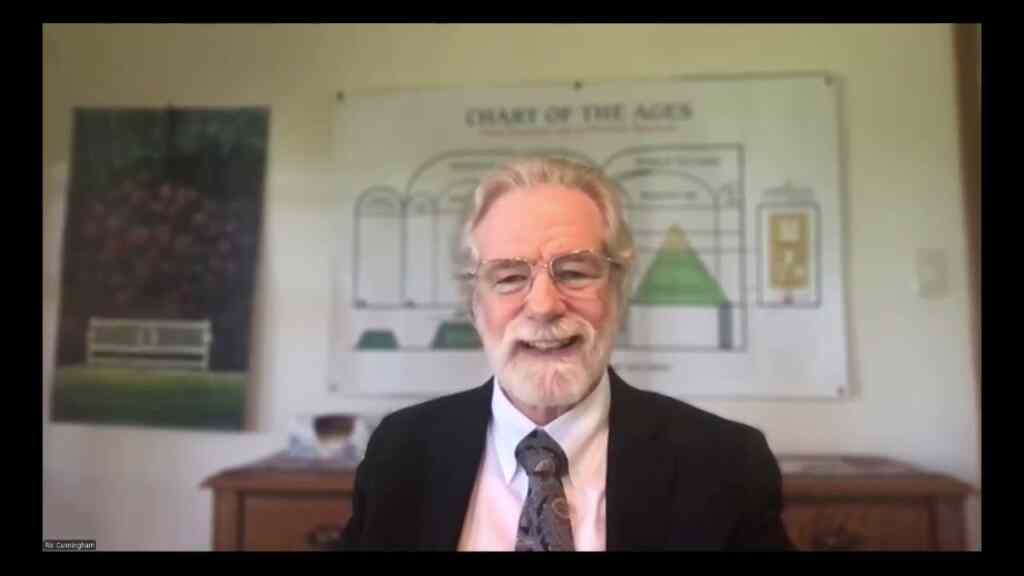
If you look at your chart of the ages. For the millennial age, there is a distinct division.
There is a place that has a shaded area under it. That’s the harvest, and then you have the mediation. The millennial age is divided into two parts. Jesus uses the chain for the first part.
He is chaining, restraining or binding the old order. But he throws it into bottomlessness in verse three. So let me read verse three, Jesus, he threw him into the abyss and shut it and sealed it over him so that he would not deceive the nations any longer until the thousand years were completed, and after these things, he must be released for a short time.
In verses 2 and 3, please notice the specificity, not the carelessness, with which the whole binding by the chain process is is shown. We always talk about the binding of Satan. We’re careless. Look at what it says. One, he lays hold on the dragon.
Two, he bound him. Three, he threw him into the pit. Four, he shut it. Five, he sealed it. Why do we always talk about bound?
There are five procedures shown there, and this is all done with the chaining all the way until the last point, where the satanic world, including the devil himself, is in this bottomlessness, and the Lord seals it over him. Now, the seal is what you need a key for. He’s locked in for the entire mediation period.
Your chart of the ages is so clear. The harvest part is the chaining part.
The mediation is the part where he’s locked in. But why do you have a key? Because you can let it out. So these two tools of Jesus are so important. Now back to the four attributes of Satan.
It calls him dragon. Now, nobody in the world has ever seen an honest to goodness dragon that breathes fire and all that sort of stuff, except in Hollywood’s imagination. But the whole world seems to know what a dragon is. Isn’t that curious? It’s a good symbol because everybody knows what it is, even though no one’s ever seen one.
But what is a dragon in your mind? It is something that dominates when it’s around. It draws all attention. Nothing else matters. It is the dominant factor.
The dragon pictures domination and intimidation. A good picture of civil power that dominates and intimidates. The second of the attributes, the serpent we saw that appear in Eden, and what did it do? It deceived.
So the second attribute is deception, Otherwise known by the term lies the third attribute, devil.
People use this kind of freely, you know, they’ll say, I don’t know about my neighbor’s kid, he’s got a devil in him, and the whole world Understands that devil is a word that means nastiness and inequality. It favors some and disrespects others. It is intentional harm and respect of persons. It’s just plain nastiness.
That’s attribute number three and number four, Satan. The word means opposer, so it defines this attribute of Satan, the spirit of opposition or contrariness. God says yes. Satan says no. God says white, Satan says black.
He always is on the other side of the question. So we have the four attributes of Satan in his world shown in verse two. All right, now that’s the beginning of the chapter. It does take us in verse three all the way to his being released for a short time in the little season, and when we get down to verse seven, where we started, this is when he is released from his prison.
Let’s go on to verse 8.
God’s purpose for the release.
Now, God’s purpose for the release is because he’s going to do some testing of the race.
I. I want you to go back to Eden for a moment and consider what happened. Deception was used there with Eve, when Eve did what she was not supposed to do. I think you all realize, if you think about it, nothing happened.
Deception then was a test, but not a test with a punishment put to it, because deception requires experience, and the real test on the rates for deception will be in the little season after it has experienced the permission of evil. But the other test was with Adam, and that was to test willful obedience, and you can do that without the permission of evil. Adam chose not to.
He disobeyed. So we have two kinds of tests. The millennial age itself, in the mediation tests the willful obedience of man, and it’s complete. You know, it says that Jesus judges not with the eye, the seeing of the eye, nor with the hearing of the ear, but with righteous judgment.
He doesn’t miss anything. He will know who is obeying because they want to. They will be called sheep, and he will know those who are obeying only because they have to, and those will be called goats.
They’ll never make it into the little season.
Okay, so God’s purpose for the release is to see what happens with the tested race when deception actually becomes a punishable offense.
Deception is God’s final test to see what faith exists in mankind. Without faith, it is impossible to please God. Faith is the test of the little season. The mechanism is deception, but the test is faith. God wants to be sure that mankind will be cut off, circumcised in the heart, from any fleshly thinking.
And that when something occurs, as it will with Satan and his followers, Mankind who is worthy of eternal life will turn to the Lord and say, lord, something’s happening. Can you take care of it? Everybody else will start reasoning and say, yeah, that’s a neat idea over there, and will fall into second death. That is the purpose for the release. Now, Satan’s purpose for the release, of course, is not the same.
His own final grasp that lost power is what he has in mind.
Okay, the deception of all is Eden revisited. Especially in terms of deception with Eve. The word gather. I didn’t read the verse. Let’s do it.
He will come out to deceive the nations which are in the four corners of the earth, Gog and Magog, and to gather them together for the war. The number of them is like the sand of the seashore. Many things to consider in this verse. Let’s continue with.
Says he has come out to gather. He wants to make a camaraderie of those sympathetic with his way of thinking. That’s his point. He will come out to deceive the nations and to gather them. Now it says he’s going to gather them for a war.
He knows very well that this is his second stand, his last stand. Either he successes or he doesn’t, and his point, of course, is that he has to have a war, a conflict. Well, there isn’t going to be one.
The war will never happen. We will see that as we progress in these verses. But that is in his mind. That’s why he is gathering people. He’s going to challenge God.
What a stupid way of thinking. He never learns, does he? Okay, now, little definition here, and then I want to go back and read the verse with you.
Will come out to deceive the nations. Now, these are not political nations. They will be gone by this time. These are ethnicities, and there are plenty of instances in Scripture which demonstrate that the world will be divided yet into ethnicities.
The Jews will have Israel. The Arabs are promised certain lands just outside of Israel. The Lord has in mind that there’s nothing wrong with ethnicity. Political divisions, yes, that’s wrong. Ethnicities, no, that’s fine.
We start as early as Noah. When Noah prophesies and says that his three sons would populate the whole earth and the earth would be divided among them. Not unified with them, but divided among them. Not divided in a bad way as we get to the little season. But very definitely ethnicities will exist.
It says the nations are in the four corners of the earth. That’s everywhere.
That’s the point. Satan is not going to localize this attack. It’s going to be worldwide.
Gog and Magog. Let me reread the verse before we talk about those two words. For some reason we have a hard time reading this verse. Exactly as it’s worded will come out to deceive the nations. Okay, there’s.
There’s our subject. The nations which are everywhere, Gog and Magog. Do you see just in the rules of plain language? The nations which are everywhere are called Gog and Magog. Gog and Magog is not Satan’s forces.
Gog and Magog are the nations. We’re going to talk about that in a second.
To gather them together for the war.
Satan wants to take the worldwide nations which go under the name Gog and Magog to gather them together for the war. He has in mind the number of them who the nations is like the sand of the seashore.
You know, that’s a code word. For what? For the earthly seed of Abraham. The stars of heaven is the spiritual seed of Abraham. The sand of the seashore is the earthly seed of Abraham.
They are all in covenant relationship with God.
The nations everywhere called Gog and Magog is the entire number of the vast human race in covenant relationship with God. The sand of the seashore seed of Abraham as promised. In other words, Satan is taken on the whole world. Now let’s get the Gog and Magog question. You know and I know that that term appears in Ezekiel as well as here.
It’s the only two places in Ezekiel, it’s the enemies of God. In Revelation, it is the covenanted people of God, and what we must do is analyze the terms. God means mountain. Magog means great mountain.
In other words, the mountains or kingdoms or ethnicities of this world.
Are fleshly and they are under the word goggles.
But even as we see in Daniel, there’s a spirit being behind nations. Now in Daniel, it’s the earthly nations. You remember Gabriel going to talk to Daniel and say, sorry, but the Prince of Persia delayed me. Well, no literal prince is going to delay Gabriel. Then he says, I have to go and struggle with the Prince of Greece.
Gabriel was not struggling with human kings. He was struggling with the power behind the earthly kingdoms, the demons. So Gog and Magog is Satan’s kingdom with its spiritual rulers behind it. Gog will be the earthly kingdom factor that invades Israel. Magog will be the spiritual forces behind that invasion.
They are the enemies of God there. Here, Gog is the human factor in the Kingdom of God and Magog is the spirit factor in the kingdom of God.
Again, Satan’s insanity shows he’s going to take on spirit beings. He can’t take on the church. They’re divine. But he deceived angels once. Apparently he figures he can do it again.
Total insanity.
Okay, the verse repeated.
Released from prison, come out to deceive the nations, the ethnicities which are in the four corners of the earth called Gog and Magog to gather them together for the war he has planned. The number of them is like the earthly seed of Abraham. The whole world in covenant relationship with God.
Now let me turn my page. The verse nine.
And they came upon the broad plain of the earth and surrounded the camp of the saints and the beloved city and fire came down from heaven and devoured them. This is the end of the picture. Now what is suggested by these actions? They came up, They is the deceived ones and they manifest themselves everywhere. It hasn’t told us and I guess we don’t have to know.
But when Satan himself is released with his whole concepts of his old way of doing things, it is going to deceive some people. Perhaps it’s going to even deceive some angels, literal angels.
But when the deception has been made, they unitedly come up.
On the broad plane of the earth, which we’ll talk about in a minute, and surrounded.
You know, that’s a tactical move of an army. You figure the best way to win is to cut them off from all outside help. So Satan’s plan is to surround the whole world of mankind. Who knows how he’s going to do that? I don’t know.
But it is a tactical stance, putting him ready to attack. Now let’s take some of the other words in the verse. They came up upon the broad plane of the earth, the margin and the Greeks say literally the breadth of the earth. In other words, everywhere won’t be localized, it’ll be worldwide and surrounded the camp of the saints. Now think in terms of the tabernacle, please, because that’s what’s meant here.
This is not about the church in Israel, which is the picture of an encampment. All during the wilderness journey, the tabernacle was in the center, representing God in his rulership, and the nation was camped all the way around it. The nation was in covenant relationship. This is what we have shown here.
Now in a bigger picture, the tabernacle is God’s kingdom from above. But the camp of the saints is the earthly seat of Abraham. It is the sand of the Seashore. They are all camped around the authority shown by the tabernacle. So this is saying Satan and his followers surround the world of mankind, the covenanted, perfect group of humanity.
And it doesn’t stop there, and the beloved city. Now, I think here the Revelator doesn’t say Jerusalem because Jerusalem represents the Church, and the church and Christ have turned over the kingdom to the Father. They are no longer its specific isolated rulers, but the holy city and city, meaning the rulership, the holy city, beloved city, the divine city.
Or as it says in the Lord’s Prayer, thy will be done as it is in heaven, that is the city. So these followers of Satan, Satan included, surround the world of mankind and the angelic hosts that rule mankind.
Now remember, he put himself in this tactical position of surrounding everything because he wants a war, and as we said earlier, there won’t be a war.
And here’s how we know it. There they are, surrounding everything, ready to attack, ready to start the war, and fire came down from heaven and devoured them. Poof. No war, just vaporization of the enemies and devoured them.
That is Satan and his followers. Now let me make a point here. You’re going to see in the next verse, the devil is referred to that is not Satan. We’ll talk about that in a minute. Satan is among these that have surrounded the saints in the beloved city.
He is the personal one. They are all the personal ones who have followed him in verse nine. So verse nine is the personal destruction of Satan and his followers devoured by fire coming down from heaven. But verse 10 is the whole concept of the satanic world. The devil who deceived them was thrown into the lake of fire and brimstone, where the beast and the false prophet are also.
They will be tormented day and night, forever and ever. So since Satan and his followers were Incinerated in verse 9, who is left? In verse 10, we know that it is the symbolic Satan and not the literal one, because the beast and false prophet are symbols also, and these are the only things that last forever. The personalities are gone, but the devil, the beast and the false prophet remain as ideas.
And what happens? First of all, the ideas are destroyed. They are thrown into the lake of fire and brimstone to join the beast and the false prophet. That went in a thousand years earlier. We saw that in chapter 19, verse 20.
And even though they are in the lake of fire and brimstone, they. They will be tormented day and night, forever and ever.
Tormented comes from a Greek word that is a reference to a touchstone and there were different kinds of touchstones back in the Roman days. They had stones where if you brought a gold coin in, you could rub it on the stone and it would knock off a little bit of gold. But you could see whether there’s something under the gold. Is it gold plate or is it real gold? And so it was something to check validity by.
In the western United States, the touchstone was there, but it was a little different. It relied on the ear, not the eye, and if you had a silver coin or a gold coin, the merchant would drop it on the touchstone, and the way it rang told you whether it was silver or gold or an imitation. So in both of these cases, touchstone is saying that these institutions, the civil institutions of Satan, the religious institutions of beast and false prophet, will forever be tested.
Word torment’s not great. Will be tested. They will be the remembrance of the human race by which they test every thing that is presented forever and ever. The memory of them will help the race never to be deceived again. All right, that’s the verses 7 through 10.
Now, part 2.
These questions were submitted when we had a workshop on this at the Central Kentucky Convention. I’m just going to use their questions, but let’s talk about them.
When Christ turns over the race to God, First Corinthians 15. Has his judgment missed something?
We already mentioned this. No. There’s no fault in the race when it enters the little season. There’s no fault in the race when Christ turns it over. They are perfected.
There isn’t something hidden. The point of the little season is not to find something hidden. Nothing is hidden. It’s all gone.
In what condition will the race be? Absolute perfection. Just as Adam and Eve were before they fell. Except that they will now be taught by the permission of evil, and they will have the experience that will make them capable of doing what they need to do.
Number two. What is Christ judging in the millennial age?
Just as there were two tests in Eden. One was deception. That was mentioned to Eve. Scriptures say Adam was not deceived. So they test for Adam was obedience.
Those two tests, the Church has to pass both of them. The world passes the test of willing obedience during the millennial age mediation. What’s not tested yet?
Well, that’s coming up. But question 2. What is Christ judging in the millennial age? Willing obedience, and I’m putting that word willing in large print in our minds.
It’s not just. Are you obeying? Because you could get away with surface obedience, but that’s not what’s happening in the mediation? Christ is judging willing obedience, and he can read the heart. So any unwilling obedience is a fake and it will be destroyed before anybody crosses the line into the eighth day.
3. What is God judging in the little season?
He is judging the triumph of faith over deception. He is judging whether circumcision of the heart is really there, so that when anything comes up that isn’t clear already, mankind will immediately turn to the Lord and say, what do we do?
Or even better, lord, please take care of it.
That will be the test of the little season. In one word, the test is faith. During the little season, God is saying, can I trust you from now into the eternities to come, that you will always turn to me if there’s a question?
And this little season will test whether that is the attitude of your heart, whether circumcision of the heart has happened, whether you have entered the eighth day circumcised or not.
Oh, look at that. I’ve got two number fours. Isn’t that curious? Well, let’s take the second number four. What allows people to be deceived?
And this is certainly connected to what we were just saying. Deception is not possible if perfect faith exists, because deception plays on human thinking. Faith relies on divine thinking. If we have perfect faith, we will not be deceived.
All right, number five, which I guess is really number six. Does God’s judgment of mankind in the little season miss something? Okay, we already talked about this in the millennium, but let’s talk about it in the little season. When the little season is in progress and completed and God has judged mankind. Is it possible that he will have missed something?
And obviously the answer is no. God doesn’t miss anything.
Go for a moment to Luke 20.
And in Luke 20, verse 36.
Let me start with 34.
This is when they were trying to trap Jesus about marriage in the resurrection.
And Jesus does answer their question, but he expands so that we get something extra out of it. Jesus said to them, the sons of this age, and he doesn’t mean the gospel age. He doesn’t mean the Jewish age. He means the world before the eighth day.
The sons of this age marry and are given in marriage. But those who are considered worthy to attain to that age. What age is that? That’s the eighth day.
How do I know that those who are considered worthy to attain to that age. Do you have to be considered worthy to attain to the millennium? No. The ransom has guaranteed that every man is going to attain to the millennium, and it is the testing and growing period for them.
They will need worthiness at the end of it, but they don’t need worthiness to attain it. So when Jesus says those who are considered worthy to attain to that age, he is talking about the eighth day worthy to attain to that age and the resurrection from the dead. We use that word sloppily. Resurrection does not mean awakening, it means total restanding. So you do have to be worthy to have a total restanding covenant relationship with God.
Again, that’s pointing to the eighth day. Those who are considered worthy to attain the eighth day and the covenant relationship with God at that time don’t marry and aren’t given in marriage.
4. They cannot die. Now this is part of my answer here for question number five. Has God missed something? No, he can’t miss it because he makes a promise here through Jesus.
I used to struggle with this verse something awful. I would search the Greek to say they will not die, but that’s not what it says. It says they cannot die. Now, it’s not that they’re immortal, they aren’t. But they cannot die because of promise.
So those who get past the little season can’t die because they have been so thoroughly tested in the millennium and in the little season. Which is proof positive that God doesn’t miss anything in the little season. For they cannot die anymore because they are like the angels and are the sons of God being sons of the resurrection. In other words, their resurrection is completed as they are turned over to the Father and pass the test that he submits to them in the little season. Okay, now question number six.
Does free will present a danger to perfected mankind in the future? Free will is important to God. It’s one of the basic concepts of his entire creative process. He refuses to make robots, he refuses to make slaves. He makes intelligent beings who can choose.
That’s what free will is. Does free will present a danger to perfected mankind past the little season? And the answer is no, and the answer is no because the tests have been so positive.
Seven. Considering all of the above, what is the purpose of the little Caesar?
It will test the race with the Eve test of Eden. In other words, it will, unlike Eve, say what happens when you are being subjected to deception, and if you fall, then you will go into second death. Nothing happened when Eve was deceived, but yes, something will happen if mankind falls into deception. So the purpose of the little season is to test the race with what I’m calling the Eve test of Eden.
The world before the little season has only been tested regarding willing obedience. Adam failed that. The race is tested for it in the millennium. But the purpose of the little season is the subtle one. Is your heart with the divine way of thinking?
Or can someone make a suggestion that makes you start to think? Well, maybe, maybe, maybe this, maybe that’s there’ll be none of this, maybe this, maybe that for all of eternity.
Well, that’s it, and we get into our intermission. If anybody has any questions, we can pursue them. I hope the reconsideration of these verses has been a blessing. May the Lord bless us.
Click Here for the PDF transcript.