



Of what practical advantage is a knowledge of the truth of the character of God and plan of salvation, to one in time of trouble, disappointment, sorrow, etc.?
The knowledge of God, the Creator, that He is wise and just, loving and all powerful, and that He is our loving Heavenly Father, one that we can draw nigh unto with confidence and trust in every time of need, through the merits of the Anointed Savior, is a wonderful source of comfort and consolation, [...]
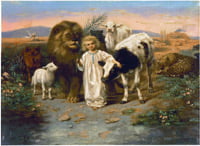
What is meant by the Scriptures which declare that in the last days there would be a fearful time of trouble (Daniel 12:1; Matthew 24:21,22)? Do these scriptures refer to the industrial and social crisis that is now developing throughout the world?
There have been many seasons of severe trouble and destruction in man's history. For example, there was the destruction of the city of Jerusalem, when about a million and a quarter of Jews were slain. In the French Revolution, vast numbers were slaughtered by the mobs and by the troops--a reign of terror. But the "time of [...]

Please explain Isaiah 9:6 where Jesus is referred to as being the "everlasting father" and "mighty God." Doesn't this support the idea of the Trinity?
Isaiah 9:6: "For unto us a child is born, unto us a son, is given: and the government shall be upon his shoulder: and his name shall be called Wonderful, Counsellor, the mighty God, the everlasting Father, the Prince of Peace." Regarding the possible confusion on this verse in harmonizing it with the scriptural teaching that [...]

If Christ was God the Father, and God the Son, and God the Holy Spirit; how could a voice from heaven say, "This is My beloved Son," when he was a man on earth?
This is an age of general enlightenment. Knowledge is increasing along all lines, and specially so in regard to the teachings of the Scriptures. God's Word has been woefully misrepresented both by friends and foes. The expression of the creeds contained in the question is nowhere found in the Bible. Our Lord Jesus never claimed to [...]
Is the oneness between Jesus Christ and God, the Heavenly Father, ethical or metaphysical?
In the early history of the Church, after the Apostles had fallen asleep, many bitter controversies were engaged in over this very question. But now in these latter days when knowledge is increasing along all lines, and particularly so as regards the knowledge and understanding of the Scriptures, the solution of the matter is clearly [...]
What is understood by the expression, “the triune God?”
Some have thought this to be a scriptural expression, but it is not to be found in the Bible. It is believed to have originated in the heathen mythologies of the Hindoos in ancient India. Webster defines the term "triune" as three in one--"an epithet used to express the unity of a trinity of persons [...]