



Should Christians build altars today?
When we look closely at the New Testament, we find no indication that Christians are ever instructed to build physical altars. This is a major shift from Old Testament worship, where altars were central to sacrifice and ritual. In the New Testament, that entire system is fulfilled in Christ. Jesus is the final sacrifice, the [...]

What evidence does the Bible give for Jesus' pre-human existence with God?
The Scriptures present Jesus as having a personal existence in heaven as the Father’s son before he was born through Mary. He was then sent by God into the world, became a human being and fulfilled the work his Father had given him. Several passages contribute to this understanding and taken together, they provide a [...]
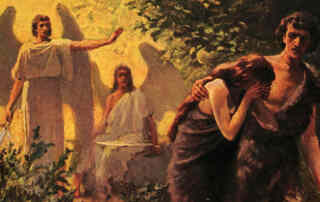
Are we really born with inherited sin? Aren't babies innocent? Doesn't sin develop once a person chooses to commit it?
It’s understandable to feel that babies seem innocent, because they have never committed a personal or deliberate sin. They have no awareness of right or wrong, and they certainly do not choose to disobey God. In terms of conduct, infants are completely innocent. The Bible makes a distinction, however, between personal wrongdoing and the inherited [...]
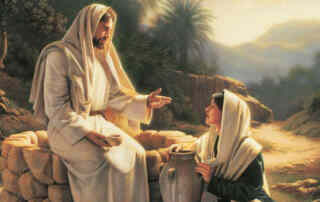
Do Matthew 26:6–13 and John 12:1–8 describe the same anointing of Jesus, or two different events? How do the Passover timelines in each passage fit together?
The accounts in Matthew 26:6-13 and John 12:1-8 are understood to describe the same anointing of Jesus at Bethany. Although there are differences in the details recorded by the two Gospel writers, the similarities are substantial: the setting is Bethany, an expensive ointment is used to anoint Jesus, there is criticism that the ointment could [...]

Zionism is in the news a lot lately. Is it scriptural?
Zionism—understood as the regathering of the Jewish people to their ancient homeland and the re-establishment of a national Jewish presence in Israel—is firmly rooted in Scripture. The Old Testament repeatedly foretells that God would gather natural Israel “from all lands whither they were driven” and restore them to the land of Canaan as an everlasting [...]
What does Genesis 3:14 mean? There is no type of snake today that eats dust and is called "Satan."
Genesis 3:14 contains a curse that speaks to both the literal serpent in Eden and to Satan, who used that serpent as his instrument. The serpent was the physical creature present, but Satan was the true deceiver operating through it. Because of this, the curse has two layers: one applied to the animal itself, and [...]